


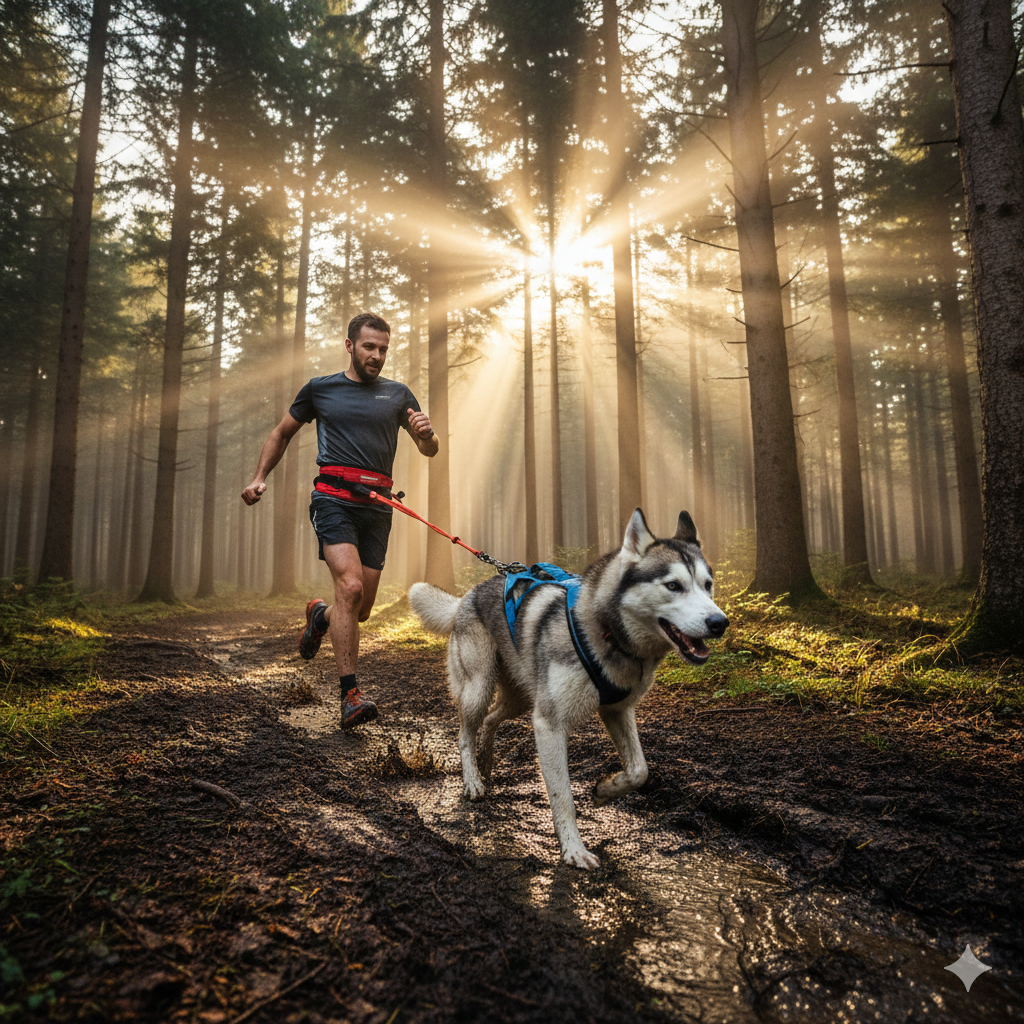
If you’ve ever gone for a jog with your dog only to find yourself being dragged toward a squirrel, you’ve already experienced a very primitive version of Canicross. But in the professional world of canine sports, that “drag” isn’t a nuisance—it’s the entire point.
Canicross (a portmanteau of “canine” and “cross-country”) is the sport of cross-country running with your dog. However, it isn’t just “running with your dog” in the traditional sense. It is a collaborative, high-speed discipline where the dog is harnessed and attached to the runner, literally pulling them forward to achieve speeds neither could reach alone. It is one of the fastest-growing dog sports globally, offering a unique blend of cardiovascular fitness, trail adventure, and an unbreakable team bond.
The Core Concept: Hands-Free Power
The fundamental difference between Canicross and a casual jog is the pulling element. In Canicross, the dog is encouraged to work in front of the runner, keeping the bungee line taut. This creates a “monopulse” effect where the dog’s power is transferred directly to the runner’s hips, increasing the runner’s stride length and speed.
It’s an exhilarating sensation—feeling the raw power of your dog helping you scale a steep, muddy incline that would normally leave you breathless. At its most competitive level, Canicross athletes can maintain sub-5-minute mile paces over rugged terrain, thanks to their four-legged turbochargers.
The Essential Gear: Why Your Standard Leash Won’t Cut It
Safety and comfort are the top priorities in Canicross. Using a standard collar and handheld leash is not only inefficient but can cause serious injury to the dog’s neck and the runner’s shoulders. To start Canicross, you need a specialized “three-piece” setup:
1. The Human Power Belt
Unlike a standard walking belt, a Canicross belt sits low on the hips or upper glutes. This ensures that the dog’s pull doesn’t strain the runner’s lower back. Most professional belts include leg straps to keep the belt from sliding up during a sprint.
2. The Bungee Line
The line connecting you to your dog must have an integrated bungee cord. This acts as a shock absorber, protecting the dog’s spine and the runner’s back from sudden jolts if the dog lunges or the runner hits a technical patch of trail.
3. The Canine Pulling Harness
This is the most critical piece of equipment. A Canicross harness is designed specifically for pulling. Unlike “non-pull” walking harnesses that restrict movement, a Canicross harness allows for full shoulder extension and distributes the weight across the chest and ribcage.
Pro Tip: Look for an “X-back” or “Long” harness if your dog is a dedicated, hard puller. For dogs that move between pulling and running beside you, a “Short” or “Half-harness” is often more versatile.
The Language of the Trail: Canicross Commands
In Agility, you use hand signals. In Flyball, you use the box. In Canicross, you have nothing but your voice. Since your dog is in front and out of your sightline, a set of directional commands is vital for navigating technical trails at high speed.
- “Gee” (pronounced ‘jee’): Turn right.
- “Haw”: Turn left.
- “Hike” or “Let’s Go”: The start command or a request for more speed.
- “On By”: The command to ignore distractions (other dogs, squirrels, or smelly bushes) and keep moving forward.
- “Easy”: Slow down (crucial for steep downhill sections).
- “Whoa”: Stop immediately.
Training these commands on daily walks before you ever strap on the belt will make your first “harness-on” run significantly safer.
Is Your Dog Built for Canicross?
The beautiful thing about Canicross is its universal appeal. While you’ll often see “Eurohounds” (a specialized cross of Pointer, Greyhound, and Alaskan Husky) at the podium of world championships, almost any healthy dog can participate.
The “Ideal” Athlete
Dogs with a high “work drive” and a love for running are the most natural fits. This includes Vizslas, German Shorthaired Pointers, Border Collies, and Huskies. However, many “non-traditional” breeds like Labradors, Terriers, and even athletic mixed breeds thrive in the sport.
Important Considerations
- Age: You should never start “pulling” a dog until their growth plates have fully closed, usually between 12 to 18 months depending on the breed.
- Structure: Brachycephalic (flat-faced) breeds like Pugs or Bulldogs are generally not suited for the high-intensity aerobic demands of Canicross, as they can struggle with temperature regulation and breathing.
- Temperature: Dogs dissipate heat much less efficiently than humans. Canicross should generally be avoided if the temperature is above 18°C (64°F) or if the humidity is high.
The Physical and Mental Benefits
Canicross is more than just a workout; it is a holistic wellness program for both ends of the bungee line.
For the Human
Running with a dog is a massive motivator. It’s much harder to skip a run when your partner is standing by the door with their harness in their mouth. Furthermore, the pulling action engages your core and glutes in a way that standard running doesn’t, making you a stronger, more resilient athlete.
For the Dog
Many behavioral issues in dogs—barking, chewing, and anxiety—stem from a lack of “purpose.” Canicross gives a dog a job. The mental focus required to navigate trails and follow cues, combined with the physical exertion, leads to a “Canicross Calm” that few other activities can replicate.
The “Pack” Bond
There is a psychological phenomenon that occurs when humans and dogs move toward a goal together. It mimics the ancient hunting partnership. This shared experience creates a level of trust and synchronization that can improve your dog’s behavior in all other aspects of life.
How to Start Your Canicross Journey
Ready to hit the trails? Follow this step-by-step approach:
Step 1: The Vet Check
Before starting any high-impact sport, get a “sports physical” for your dog. Ensure their heart, lungs, and joints are up to the task.
Step 2: Master the “On By”
Start by walking. When your dog sees a distraction, give the “On By” command and reward them for moving past it. A dog that lunges at a squirrel while you are running at full speed is a major safety hazard.
Step 3: Encourage the Pull
Most of us have spent years teaching our dogs not to pull on the leash. Now, you have to tell them it’s okay. Use a specific “start” cue like “Hike!” and praise them the moment the line goes taut. Many people find it helpful to have a friend run ahead of the dog initially to encourage the forward drive.
Step 4: Find a Group
Canicross is a social sport! There are clubs all over the world. Running in a group helps teach your dog “trail manners”—how to pass other teams without getting distracted or over-excited.
Safety and Trail Etiquette
As a Canicrosser, you are an ambassador for the sport. Always follow these rules:
- Yield to Others: If you see hikers or horses, slow down and give them plenty of space.
- Pick Up Poop: Carrying a “poop bag” is a must. Many runners use a small “dry bag” attached to their belt to carry waste until they find a bin.
- Check the Pads: Trail surfaces can be abrasive. Regularly check your dog’s paw pads for cracks or tears. Use a high-quality paw balm if running on rocky or dry terrain.
- Hydrate: Always carry water for your dog, even on short runs.
Conclusion: A Life-Changing Partnership
Canicross isn’t just about the miles or the medals. It’s about the quiet moments in the woods when the only sounds are the rhythmic thud of eight feet on the dirt and your dog’s happy, steady breathing. It’s about the mud on your legs and the joy in your dog’s eyes when you pull the harness out of the cupboard.
Whether you’re looking to shave minutes off your 5K time or simply want a way to tire out your energetic pup, Canicross offers a path to a healthier, happier life for both of you. So, strap on the belt, click the line, and get ready to experience the trail like never before.

