


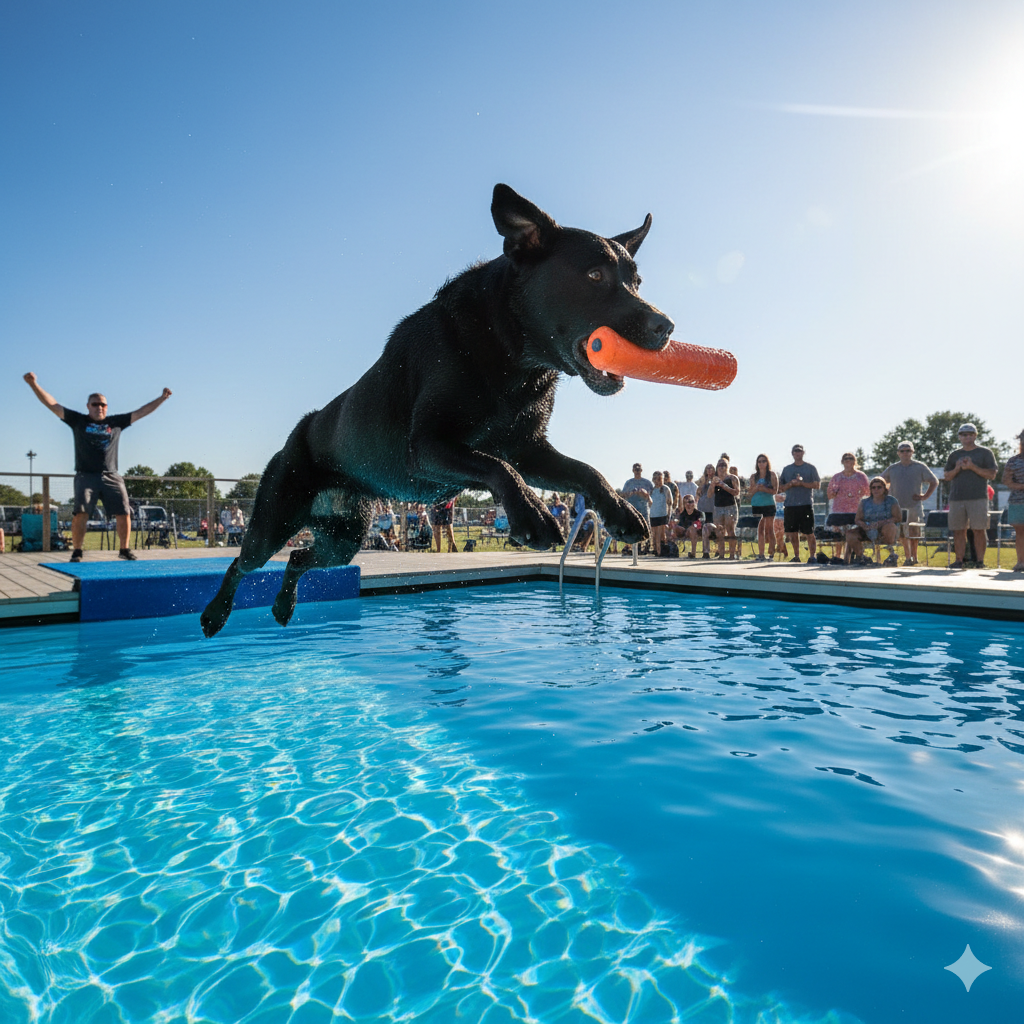
If your dog lives for the fetch, has an insatiable love for water, and approaches every leap with boundless enthusiasm, then you’ve glimpsed the spirit of Dock Diving. This exhilarating dog sport transforms a simple jump into a spectacle of athleticism, precision, and pure canine joy.
Imagine a long dock stretching out over a massive pool. A dog, eyes locked on a toy, rockets down the dock, launching itself into the air with incredible force, soaring through space before making a colossal splashdown. This isn’t just a fun day at the lake; it’s Dock Diving, a rapidly growing dog sport that captures the hearts of spectators and participants alike with its blend of adrenaline and aquatic fun.
What Exactly is Dock Diving? A Leap of Faith and Fun
At its core, Dock Diving is a competitive sport where dogs jump for distance or height into a body of water from a raised platform (the “dock”). It’s incredibly straightforward in concept, yet demands considerable skill, drive, and confidence from both the dog and the handler.
The Setup: Dock, Pool, and Toy
- The Dock: A specially constructed platform, usually 40 feet long and 8 feet wide, extending over a pool. It’s covered with non-slip matting for safe, powerful take-offs.
- The Pool: A large pool (often 40+ feet long and 20+ feet wide, or even larger) filled with clean, chlorinated water, providing a safe landing zone for the dogs. Water quality is strictly monitored at competitive events.
- The Toy: Typically a buoyant toy (a bumper, ball, or even a specific disc) that floats and is easily visible in the water.
The Three Main Disciplines
Dock Diving competitions are generally split into three exciting disciplines, each testing a different aspect of canine athleticism:
- Big Air (Long Jump): This is the flagship event and what most people think of when they hear “Dock Diving.” The handler throws a toy into the pool, and the dog runs down the dock, leaps into the air, and catches the toy (or lands where the toy would be) as far out as possible. The distance is measured from the end of the dock to the point where the dog’s tail base enters the water. Each team typically gets two jumps per round, with the best score counting.
- Extreme Vertical (High Jump): In this discipline, the dog jumps for height. A bumper or toy is suspended from an arm extending over the pool, positioned at varying heights. The dog must grab the toy from the air, and the height is measured from the top of the toy to the surface of the water. This tests a dog’s vertical leap and precision.
- Speed Retrieve (Speed Swim): This event is a race against the clock. A toy is suspended at the far end of the pool (usually around 20 feet from the end of the dock). The dog starts at the 20-foot mark on the dock, and on the “go” command, sprints down the dock, jumps, swims to the toy, retrieves it, and brings it back to the handler. The fastest time wins. This tests speed, swimming prowess, and quick retrieves.
A Splashy History: From Backyard Fun to Global Sport
Dock Diving began somewhat informally in the late 1990s as a way to entertain crowds at dog-centric events like Purina Incredible Dog Challenge. Spectators were captivated by dogs making incredible leaps, and it quickly became clear that this wasn’t just a novelty—it was a bona fide sport waiting to happen.
The first major competition was held in 2000 at the first annual Incredible Dog Challenge National Finals. The sport rapidly gained popularity, leading to the formation of governing bodies like DockDogs Worldwide and Ultimate Air Dogs. These organizations established standardized rules, measurement techniques, and ranking systems, transforming backyard splashing into a legitimate competitive arena.
Today, Dock Diving events are held across the globe, from small regional competitions to massive national and international championships, attracting thousands of dedicated handlers and their high-flying canine athletes.
The Dynamic Duo: Handler and Dog in Harmony
Success in Dock Diving is a team effort. The handler’s skill is just as crucial as the dog’s athleticism.
The Handler’s Role: The Motivator and Targeter
- The Throw: A good handler knows how to throw the toy to maximize their dog’s distance. This isn’t always about throwing it as far as possible; it’s about throwing it at the right angle and speed to encourage the dog’s biggest leap. Some handlers use a specific “pre-throw” ritual to get their dog excited.
- Motivation: Keeping the dog hyped up and focused. This often involves enthusiastic verbal cues, waving the toy, and even running alongside the dog on the dock.
- Reading the Dog: Understanding when the dog is ready to jump and when they need a moment to regain focus.
The Dog’s Role: The Athlete and Enthusiast
- Toy Drive: The dog must have an intense desire for the toy. This is the primary motivator for their incredible leaps.
- Water Love: A dog that genuinely enjoys swimming and retrieving from water will naturally excel.
- Speed and Agility: The ability to sprint down the dock and launch powerfully.
- Confidence: Dogs need to be confident on the slippery dock and comfortable with the deep water.
- Tracking: In Big Air, the dog must track the toy’s flight path and time their jump perfectly.
Is Your Dog a Dock Diving Star?
While certain breeds like Labradors, Golden Retrievers, German Shorthaired Pointers, and Belgian Malinois often dominate the top ranks due to their natural retrieve drive and athleticism, almost any healthy dog with a love for water and toys can participate.
Ideal Candidates:
- Obsessed with Toys: Does your dog live to chase and retrieve? That’s half the battle won.
- Loves Water: Is your dog naturally drawn to lakes, pools, or even puddles?
- Good Health: Dogs must be physically sound with no joint issues. A vet check is always recommended before starting.
- Confidence: While some dogs initially need encouragement, a dog that eventually develops confidence around the dock and water will thrive.
Considerations:
- Age: While puppies can be introduced to water and retrieving, high-impact jumping should be avoided until growth plates are closed (typically 12-18 months) to prevent injury.
- Breed Size: Tiny dogs can jump surprisingly far, but their smaller stride often means they won’t reach the same distances as larger breeds. However, there are often divisions for different size classes.
- Coat Type: Dogs with heavy coats might need extra care to prevent overheating on hot days.
The Benefits: Beyond the Splash
Dock Diving offers a treasure trove of benefits that extend far beyond the competitive thrill.
- Physical Fitness: It’s an incredible full-body workout for dogs, combining sprinting, jumping, and swimming. It builds muscle, improves cardiovascular health, and burns energy efficiently.
- Mental Stimulation: The focus required to track a toy, time a jump, and retrieve engages a dog’s mind, preventing boredom and reducing destructive behaviors.
- Boosted Confidence: Many dogs, especially those that might be hesitant at first, gain immense confidence as they master the dock and conquer their fears.
- Enhanced Bond: Working as a team to achieve a common goal strengthens the human-canine bond. The shared excitement and challenges create a unique partnership.
- Community: The Dock Diving community is famously welcoming and supportive. You’ll find like-minded individuals who share your passion for dogs and water sports, forming lasting friendships.
- Pure Fun: Let’s be honest, watching dogs fly through the air is incredibly entertaining, and seeing your own dog achieve a personal best is an unparalleled joy.
Starting Your Dock Diving Adventure
Ready to make a splash? Here’s how to dip your paws into the world of Dock Diving:
- Introduce Water Positively: Ensure your dog has a positive association with water. Start in shallow, calm areas.
- Build Toy Drive: Make the retrieve game the most exciting thing in the world for your dog.
- Find a Local Facility: Many dog training centers, pet stores, or even fairgrounds now have temporary or permanent Dock Diving pools. Look for “Splash Days” or “Try It” events where you can introduce your dog to the dock in a low-pressure environment.
- Enroll in a Beginner Class: An experienced instructor can teach you proper throwing techniques, how to motivate your dog, and crucial safety protocols.
- Start Small: Don’t expect huge jumps on day one. Celebrate every small step—getting on the dock, taking a few steps, then a small jump, and gradually increasing distance.
- Join an Association: Organizations like DockDogs Worldwide and Ultimate Air Dogs sanction events, provide rulebooks, and help you find local clubs and competitions.
Conclusion: Leap into a World of Fun
Dock Diving is more than just a dog sport; it’s a celebration of canine athleticism and the sheer unadulterated joy dogs find in play. It’s the thrill of the chase, the exhilaration of flight, and the refreshing splash of a perfect landing. It’s an activity that will challenge both you and your dog, build an incredible bond, and fill your lives with excitement and unforgettable moments.
So, if your furry friend dreams of flying and delights in a good swim, it might be time to unleash their inner Olympian and dive headfirst into the fantastic world of Dock Diving!

