


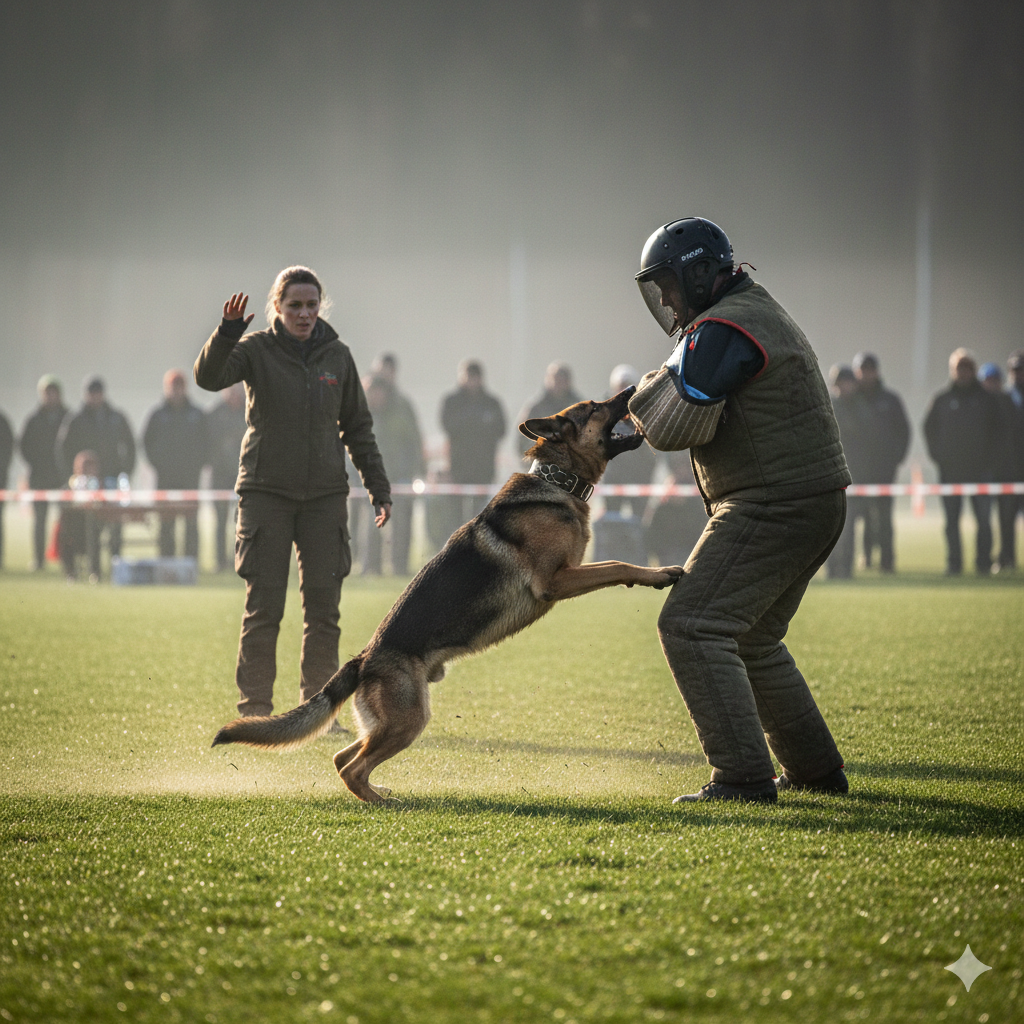
The word “Schutzhund” (pronounced SHOOTZ-hoont) often conjures images of powerful dogs, snarling at padded sleeves, or perhaps even the intimidating sight of a canine taking down a fleeing “bad guy.” For many, it’s a mysterious and sometimes misunderstood sport, synonymous with fierce protection dogs and intense training. But to those who dedicate their lives to it, Schutzhund (now officially known as IPO or IGP) is much more than just bite work. It is a rigorous, three-phase dog sport that tests a dog’s courage, intelligence, obedience, and athleticism to an unparalleled degree.
Originating in Germany in the early 20th century, Schutzhund was developed as a breed suitability test for German Shepherds, ensuring they possessed the mental and physical traits necessary for working roles such as police and military service. Today, while still dominated by German Shepherds, Belgian Malinois, and Rottweilers, it has evolved into an international sport that highlights the exceptional capabilities of working breeds and the profound partnership between handler and dog.
The Trifecta of Trials: The Three Phases of IPO/IGP
Schutzhund is unique in its comprehensive assessment, demanding excellence in three distinct phases: Tracking, Obedience, and Protection. A dog must pass all three phases to receive a title. This holistic approach ensures a truly well-rounded working dog.
Phase 1: Tracking (The Nose Knows)
This phase tests the dog’s innate scenting ability and mental discipline. It’s often considered the foundation, requiring immense focus and methodical work from the dog.
- The Setup: A tracklayer walks a specific pattern (straight lines, corners) across varied terrain (grass, dirt, light vegetation), dropping small, inert articles (leather, carpet, wood) along the way.
- The Dog’s Task: After a specified waiting period (the track “ages”), the dog is led to the starting point and must follow the tracklayer’s exact footsteps, nose to the ground, indicating each article by either lying down or sitting beside it.
- The Challenge: The dog must ignore distracting human and animal scents, strong winds, and uneven ground, focusing solely on the subtle scent left by the tracklayer. The length and age of the track increase with each level (from IPO1 to IPO3).
- Scoring: Judges look for a deep, consistent nose work, accurate turns, and precise article indication.
Phase 2: Obedience (Precision and Control)
This phase is far more demanding than standard competitive obedience, requiring military-grade precision and a strong working drive, even amidst high distractions.
- The Setup: Performed in a large field, it includes a variety of off-leash exercises.
- The Dog’s Task:
- Heeling: The dog must heel perfectly off-leash through various paces (normal, fast, slow), turns, and even a “group” of people.
- Sit Out of Motion/Down Out of Motion: The dog is commanded to sit or lie down while the handler continues to walk, then recalled later.
- Retrieve: The dog must retrieve various articles (a wooden dumbbell, a metal dumbbell, and a heavy retrieve over a scaling wall or A-frame), bringing them smartly to the handler.
- Send Out: The dog is sent away from the handler to a designated point (often 30-40 yards away) and commanded to down.
- Long Down/Stay: While another dog performs its entire obedience routine, the dog must remain in a down position, out of sight of its handler.
- Scoring: Points are deducted for crooked sits, slow retrieves, wide turns, or any lack of enthusiasm or precision. The “spirit” of the dog is crucial—they must perform with joy and engagement.
Phase 3: Protection (Controlled Aggression and Courage)
This is the phase that defines Schutzhund for many, and also the source of much misunderstanding. It is not about training a “mean” or out-of-control dog. It is about channeling a dog’s natural protective instincts into highly controlled, disciplined, and courageous actions.
- The “Helper” (Decoy): This is a specially trained individual who wears a heavily padded bite suit or sleeve. They simulate a threat.
- The Dog’s Task:
- Search for Helper: The dog is sent to “search” designated blinds (small structures) for the hidden helper.
- Alert: Upon finding the helper, the dog must bark to “alert” the handler.
- Courage Test/Defense of Handler: The helper attempts to escape or attacks the handler. The dog must pursue and apprehend the helper by biting the padded sleeve/suit with a full, firm grip.
- Out/Release: Crucially, the dog must immediately release the helper on command (the “out” command), regardless of the helper’s movement or attempts to escape. This demonstrates the dog’s control and handler’s authority.
- Guarding: After the out, the dog must guard the helper, preventing escape, until the handler arrives.
- Scoring: Judges evaluate the dog’s courage, fighting drive, grip quality, power, and, most importantly, the dog’s absolute control and willingness to “out” on command. A dog that doesn’t out, or shows fear, will not pass.
Why Schutzhund? The Deeper Purpose
Beyond the competitive thrill, Schutzhund serves several critical purposes:
- Breed Preservation: It helps identify and preserve the working characteristics of breeds like the German Shepherd, ensuring they retain their intelligence, courage, and utility.
- Extreme Control: The level of control required, particularly in the protection phase, is unparalleled. A Schutzhund-titled dog is one of the most well-controlled and disciplined dogs imaginable.
- Physical and Mental Fitness: It provides an incredible outlet for high-drive working dogs, channeling their energy into productive and fulfilling activities.
- Unbreakable Bond: The intensity of the training builds an incredibly deep and trusting relationship between handler and dog. The dog learns to rely on its handler’s guidance in stressful situations, and the handler learns to read their dog’s every move.
- Social Responsibility: A well-trained Schutzhund dog is never a threat to the public. They are highly stable, confident, and under absolute control. The sport actively weeds out dogs with unstable temperaments.
The Controversy and Misconceptions
Schutzhund often faces criticism, largely due to a misunderstanding of the protection phase.
- “Aggressive Dogs”: The most common misconception is that Schutzhund trains dogs to be aggressive towards people. This is false. Dogs selected for Schutzhund must have a stable temperament and strong nerves. Training focuses on controlled aggression directed only at the padded sleeve/suit, never the person. A truly aggressive or fearful dog cannot succeed in Schutzhund because they lack the courage and stability to perform under pressure and will not “out” on command.
- “Bite Work is Bad”: The bite work is a highly ritualized game. For the dog, it’s a form of high-prey drive play, similar to a Border Collie chasing a frisbee. They are biting an object, not a person. The “out” command is paramount; it demonstrates the dog’s ability to switch off its drive instantly, a cornerstone of control.
- “Dangerous Sport”: Like any sport involving powerful animals, there are inherent risks, but the training is meticulously controlled. Helpers are highly trained professionals, and dogs are carefully vetted for temperament.
Who Competes? The Breeds of Intensity
While the sport is open to many breeds, it is dominated by those specifically bred for working roles:
- German Shepherds: The original breed for the sport, known for their versatility, intelligence, and protective instincts.
- Belgian Malinois: Renowned for their extreme drive, speed, and athleticism. Often seen as the “Ferrari” of working dogs.
- Rottweilers: Powerful and loyal, with a deep protective instinct when properly trained.
- Dutch Shepherds: Similar to Malinois, known for their intensity and drive.
- Boxers: Can also excel, demonstrating power and agility.
Getting Started: A Journey, Not a Sprint
Embarking on a Schutzhund journey is a significant commitment. It is not for the faint of heart, or for every dog.
- Start with the Right Dog: A stable temperament, strong nerves, and natural working drives are crucial. Many serious competitors purchase dogs specifically from working lines.
- Find a Reputable Club: This is the most critical step. Look for an established Schutzhund/IPO/IGP club with experienced trainers and helpers. Avoid any club that promotes aggressive or uncontrolled training methods. A good club prioritizes safety and proper technique.
- Basic Obedience is a Must: While Schutzhund obedience is advanced, a dog needs a solid foundation in basic obedience before even thinking about the protection phase.
- Observation is Key: Spend time at trials and club training sessions. Watch the dogs and handlers, ask questions, and learn the nuances of the sport.
- Patience and Dedication: It takes years of consistent training to achieve an IPO3 title. It’s a marathon, not a sprint, and requires unwavering commitment from the handler.
Conclusion: The Ultimate Partnership
Schutzhund, or IPO/IGP, is the epitome of canine athleticism and partnership. It demands the absolute best from both dog and handler—a working dog with courage, intelligence, and unwavering loyalty, and a handler with skill, patience, and profound understanding.
It’s a sport that challenges misconceptions and celebrates the incredible capabilities of working breeds, showcasing not a dangerous animal, but a highly disciplined, controlled, and magnificent canine athlete. For those who embrace its rigor, Schutzhund offers an unparalleled journey of growth, trust, and the forging of an unbreakable bond that transcends simple companionship. It is, quite simply, the ultimate test of a working dog.

