


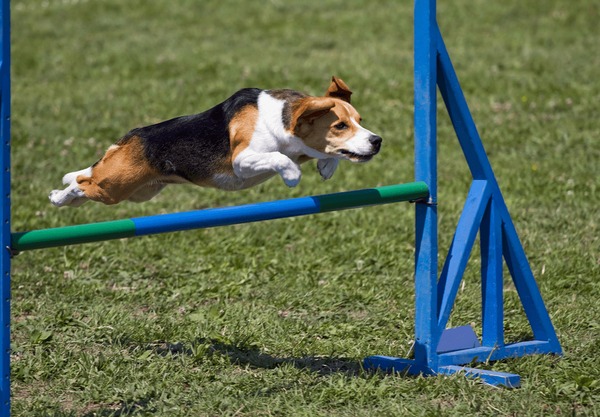
Have you ever watched a dog gracefully weave through poles, leap over hurdles, and rocket through tunnels with an almost supernatural focus and speed? That, my friends, is the mesmerizing sport of Dog Agility – a high-octane dance between handler and canine that tests communication, athleticism, and the unbreakable bond they share. More than just a competition, agility is a journey, a partnership, and for many, a way of life.
What Exactly IS Dog Agility?
At its core, dog agility is a timed event where a handler directs a dog through an obstacle course. The course typically consists of a variety of obstacles, including:
- Jumps: Single hurdles, double hurdles (two bars set close together), and panel jumps (a solid panel instead of bars).
- Weave Poles: A series of 6 to 12 poles spaced evenly, through which the dog must weave in a serpentine pattern. This is often considered one of the most challenging obstacles to teach.
- Tunnels: Open tunnels that the dog runs through, and closed tunnels (sometimes called “chutes”) where the dog enters an open end and must push through a collapsed fabric tube.
- Contact Obstacles: These are obstacles the dog must climb onto and then descend from, with specific “contact zones” (often painted yellow) that the dog’s paw must touch. These include:
- A-Frame: Two broad ramps hinged together at the top, forming an “A” shape.
- Dog Walk: A long, elevated plank with ramps leading up and down.
- See-Saw (or Teeter-Totter): A pivot obstacle where the dog runs up one side, causing it to tip and allow them to run down the other.
- Table: A raised platform where the dog must pause for a set number of seconds (usually 5) before continuing.
The goal? To complete the course accurately and as quickly as possible, incurring the fewest faults. It’s a sprint against the clock, but precision is paramount.
A Brief Leap Through History
The sport of dog agility originated in the UK in the late 1970s. Peter Meanwell, an internationally renowned dog trainer, was asked to create an entertaining demonstration for the Crufts Dog Show in 1978. Inspired by equestrian show jumping, Meanwell devised a course that showcased dogs’ natural athleticism and their handlers’ ability to direct them. The demonstration was an instant hit, and within a few years, it had evolved into a competitive sport.
From those humble beginnings, agility spread like wildfire across the globe, reaching the United States, Europe, Australia, and beyond. Today, it’s a thriving international sport with various organizations, rules, and championship events, fostering a global community of dedicated dog lovers.
The Dynamic Duo: Handler and Dog
What truly makes agility captivating is the intricate partnership between the handler and the dog. The dog doesn’t just run wild; it’s guided by the handler’s verbal cues, hand signals, and body language. This silent, seamless communication is honed through countless hours of training and builds an incredible bond of trust and understanding.
The Handler’s Role: The handler is the choreographer, the navigator, the cheerleader. They must:
- Read the Course: Mentally walk the course before the run, strategizing the fastest and most efficient path.
- Give Clear Cues: Use precise verbal commands (e.g., “weave,” “tunnel,” “go on”) and hand signals to direct the dog.
- Use Body Language: Position themselves to “push” the dog in one direction or “pull” them in another, using their body as a visual fence or guide.
- Motivate and Encourage: Keep their dog engaged and excited, especially during moments of distraction or fatigue.
- Maintain Focus: Agility runs are fast. A momentary lapse in focus from the handler can mean a missed obstacle or a costly fault.
The Dog’s Role: The dog is the athlete, the performer, the star! They must:
- Understand Cues: Reliably respond to the handler’s directions, even at high speeds and under pressure.
- Exhibit Drive and Focus: Have a strong desire to work and complete the course.
- Possess Physical Fitness: Be healthy, agile, and able to safely perform the demanding physical tasks.
- Maintain Enthusiasm: Enjoy the game! A happy, enthusiastic dog is a fast, accurate dog.
The Thrill of Competition: What Happens at a Trial?
Agility trials are bustling, energetic events. Here’s a typical rundown:
- Course Walk-Through: Before each class (e.g., Novice Jumps, Open Standard), handlers are allowed on the course without their dogs for a set period (usually 8-10 minutes). This is where they strategize, memorize the sequence, and visualize their path.
- Running the Course: When it’s their turn, the handler and dog approach the starting line. Once the judge gives the signal, the clock starts, and off they go! The handler directs the dog through the course, navigating the obstacles as quickly and accurately as possible.
- Faults: Judges watch for specific errors that result in faults:
- Refusals: The dog hesitates or runs past an obstacle.
- Run-Outs: The dog completely misses an obstacle.
- Wrong Course: The dog takes an obstacle out of sequence.
- Dropped Bars: The dog knocks a bar off a jump.
- Contact Zone Violations: The dog doesn’t touch the painted contact zone on the A-frame, dog walk, or teeter.
- Time Faults: Exceeding the allowed course time.
- Disqualification (DQ): Major errors like aggressive behavior, the handler touching the dog on course, or the dog leaving the ring.
- Scoring: The dog with the fewest faults and the fastest time typically places highest. Dogs earn titles by accumulating “qualifying runs” (QQs) – clear rounds within the allotted time. As dogs earn more QQs, they move up through different levels (e.g., Novice, Open, Excellent, Master).
Benefits Beyond the Ribbon
While ribbons and titles are certainly gratifying, the true rewards of agility extend far beyond the competitive ring.
- Physical Exercise for Both: Agility is a fantastic workout for both ends of the leash! Dogs get to run, jump, and weave, building muscle and endurance. Handlers are constantly moving, running, and strategizing.
- Mental Stimulation: This isn’t just about physical exertion; it’s a huge mental challenge for dogs. They have to think, problem-solve, and respond to complex cues. This mental engagement can prevent boredom and reduce destructive behaviors in active breeds.
- Enhanced Communication: The precision required in agility sharpens the communication between dog and handler to an incredible degree. You learn to “speak” your dog’s language and they learn to interpret yours, fostering a deeper, more nuanced relationship.
- Boosted Confidence: Shy or nervous dogs often blossom in agility. Successfully navigating obstacles and performing tasks builds their self-assurance.
- Stronger Bond: Working together as a team towards a common goal is incredibly rewarding and strengthens the human-canine bond in profound ways. It builds trust, mutual respect, and shared joy.
- Community: The agility world is known for its supportive and welcoming community. You’ll meet like-minded individuals who share your passion for dogs and sport, forming lasting friendships.
Is Agility Right for Your Dog (and You)?
Agility isn’t just for Border Collies and Shepherds, though they often excel! Many breeds, and even mixed breeds, enjoy and succeed in agility.
Ideal Candidates:
- Healthy Dogs: Dogs should be in good physical condition with no orthopedic issues. A vet check-up is crucial before starting.
- Energetic Dogs: Dogs with a natural drive to run, jump, and play often take to agility quickly.
- Dogs with Basic Obedience: A good “stay,” “come,” and “sit” are foundational.
- Dogs Who Love to Learn: A dog with a willing attitude and a desire to work for rewards (treats or toys) will thrive.
Considerations for Handlers:
- Time Commitment: Training takes time and dedication.
- Patience: Learning new skills takes time for both you and your dog. There will be frustrations, but persistence pays off.
- Physical Fitness: You don’t need to be an Olympic athlete, but you should be able to run and move comfortably.
Starting Your Agility Journey
Intrigued? Here’s how you can get started:
- Find a Local Class: Search online for “dog agility classes near me” or ask at your local dog park. Look for certified instructors who use positive reinforcement methods.
- Start with Foundations: Good instructors will begin with foundation skills – teaching your dog body awareness, motivation, focus, and basic obstacle performance before combining them into courses. This prevents injuries and builds confidence.
- Invest in Good Equipment (Eventually): While you can buy basic jumps and tunnels for backyard practice, proper contact obstacles are expensive and require careful construction for safety. Most people rely on class equipment.
- Join the Community: Attend local trials, even just to watch. Talk to handlers, observe their techniques, and get a feel for the sport.
The Unforgettable Feeling
Imagine this: You and your dog are at the starting line. The crowd is quiet, all eyes on you. You give the “go” command, and your dog explodes forward, ears flopping, tail wagging. You sprint alongside, yelling cues, weaving your body to guide them. Over the jump! Into the tunnel! Weave, weave, weave! Up the A-frame, touching the contact! Down the dog walk! Finally, through the last jump, and the crowd erupts in cheers. You drop to your knees, your dog leaping into your arms for a celebratory hug.
That feeling – the rush, the pride, the sheer joy of working as one with your best friend – that’s the magic of dog agility. It’s more than a sport; it’s an adventure waiting to happen, strengthening a bond that will last a lifetime.
So, if you’re looking for a challenging, rewarding, and incredibly fun activity to share with your canine companion, perhaps it’s time to unleash the zoomies and discover the thrilling world of dog agility!

