


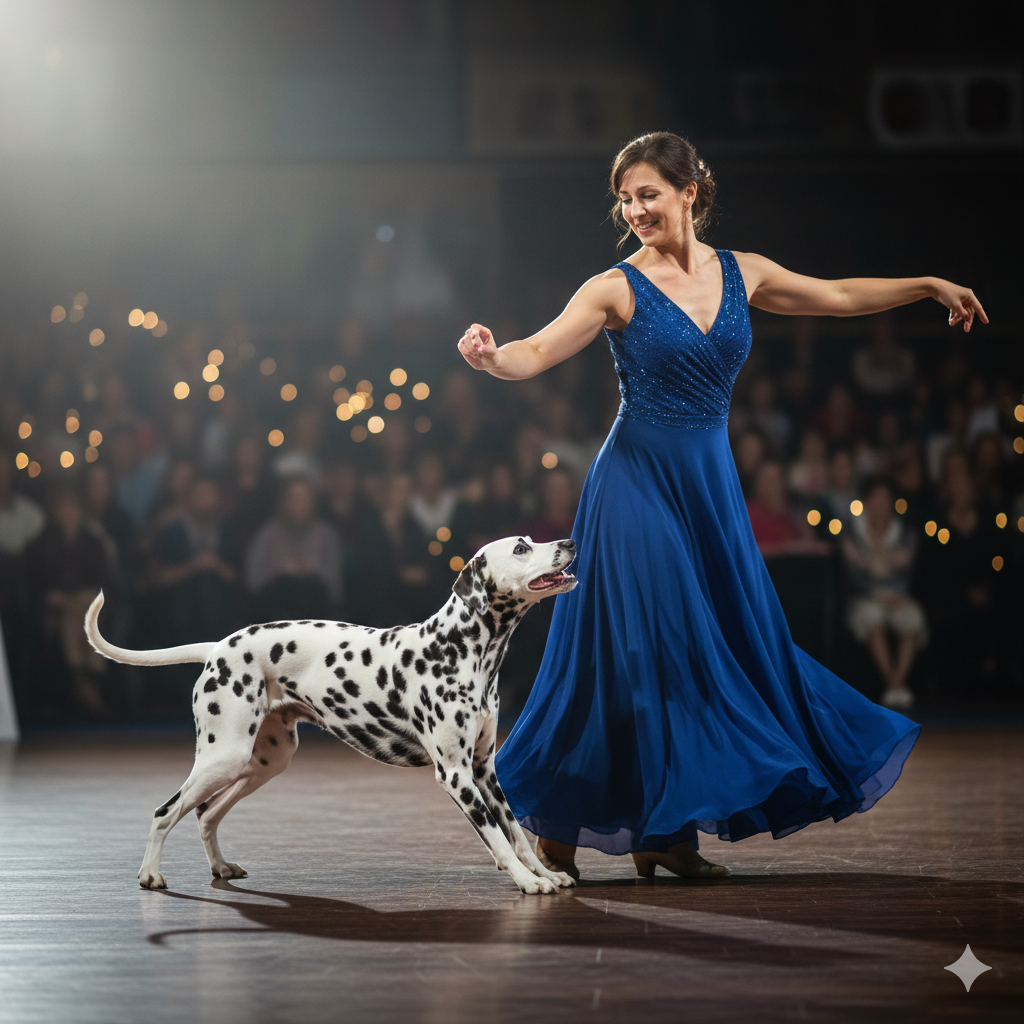
Imagine a dog waltzing gracefully, bowing on cue, weaving intricate patterns around its handler’s legs, or even moonwalking backwards – all set to music, with a flourish that would make Broadway choreographers proud. This isn’t just a dream; it’s the captivating reality of Canine Freestyle.
Often dubbed “Doggie Dancing” or “Heelwork to Music,” Canine Freestyle is a dog sport that blends obedience, tricks, and artistry into a choreographed routine performed to music. It’s a powerful testament to the bond between human and dog, showcasing not just impressive training but also creativity, showmanship, and a profound level of mutual understanding. If you’ve ever watched a pair gracefully glide across a ring and felt a lump in your throat from the sheer joy and precision, you’ve experienced the magic of Canine Freestyle.
What Exactly is Canine Freestyle? A Harmony of Movement and Music
At its heart, Canine Freestyle is a performance sport where a handler and dog work together to create a seamless, engaging routine. Unlike other dog sports that emphasize speed (like Agility or Flyball) or precision in a rigid format (like traditional Obedience), Freestyle prioritizes flow, musicality, and interpretation.
The routine is typically set to a piece of music chosen by the handler, and the choreography should reflect the mood, tempo, and style of that music. Dogs perform a wide array of movements, which can be broadly categorized:
- Heelwork Positions and Transitions: This is the bedrock of Freestyle. It involves the dog performing various heeling positions (left side, right side, front, behind, back up heel) and smoothly transitioning between them, often in intricate patterns like circles, spirals, and figure-eights. The dog should maintain eye contact and engagement with the handler throughout.
- Tricks and Advanced Movements: This is where the creativity truly shines. Dogs learn a vast repertoire of tricks, including:
- Weaving: Through the handler’s legs (forward, backward, side-to-side).
- Spins and Twirls: Turning in circles, both clockwise and counter-clockwise.
- Bow/Curtsy: A polite, graceful dip.
- Paws Up: Placing paws on the handler’s arm or shoulder.
- Side-stepping and Back-stepping: Moving laterally or backwards in heel position.
- Crawling: Moving on their belly.
- Figure 8s and Spirals: Intricate patterns around the handler’s legs.
- Jumps and Hoops: Small, controlled jumps, often over the handler’s arm or through a hoop.
- Rollovers and Plays Dead: Fun, crowd-pleasing moves.
- Flow and Musicality: This is what elevates a collection of tricks into a performance. The movements should match the music, with changes in tempo and energy. A slow, sweeping piece of music might call for gentle weaves and bows, while an upbeat tune might inspire quick spins and playful jumps. The entire routine should feel cohesive and tell a story, or at least evoke an emotion.
A Step Back in Time: The Origins of Doggie Dancing
The roots of Canine Freestyle can be traced back to the mid-1980s, primarily in the United States, the UK, and Canada. It wasn’t a sudden invention but rather an evolution from traditional obedience competitions. Handlers, particularly those involved in musical kur (dressage to music with horses), began experimenting with incorporating more creative and entertaining elements into their obedience routines.
Early pioneers sought to make dog training more engaging and to showcase the joy and athleticism of their dogs beyond the rigid structure of traditional obedience trials. They started adding turns, spins, and more dynamic movements, often set to music. The formalization of rules and judging criteria began in the late 1980s and early 1990s, with organizations like the Musical Dog Sport Association (MDSA) in the US and Canine Freestyle Federation (CFF) helping to define and promote the sport.
Today, Canine Freestyle is a global phenomenon, with organizations and competitions flourishing across Europe, Asia, and Australia, drawing enthusiasts from all walks of life and all breeds of dogs.
The Dynamic Duo: Handler and Dog as One
What makes Canine Freestyle truly captivating is the profound connection between the handler and the dog. It’s a partnership built on trust, patience, and mutual respect.
The Handler’s Role: The Choreographer and Conductor
The handler is the architect of the routine. Their responsibilities include:
- Music Selection: Choosing a piece of music that suits their dog’s personality and their own performance style.
- Choreography: Designing the sequence of movements to fit the music, considering transitions, pacing, and visual impact.
- Cueing: Discreetly giving verbal and hand signals to the dog during the performance. The goal is to make these cues almost invisible to the audience, giving the impression that the dog is performing spontaneously.
- Showmanship: Engaging with the audience, conveying emotion, and making the routine entertaining.
- Patience and Creativity: Training complex routines takes immense patience and the ability to break down behaviors into small, achievable steps.
The Dog’s Role: The Performer and Partner
A successful Freestyle dog is more than just well-trained; it’s a willing and enthusiastic participant. Key traits include:
- Engagement and Focus: Maintaining eye contact and attention on the handler throughout the routine, even with distractions.
- Willingness to Please: A strong desire to work with the handler.
- Body Awareness: Understanding how to move their body in various positions and perform intricate footwork.
- Physical Fitness: While not as physically demanding as agility, dogs need good muscle tone, flexibility, and stamina to perform a 2–3 minute routine.
- Enthusiasm: A dog that genuinely enjoys the process shines in the ring.
The Benefits: More Than Just a Show
Participating in Canine Freestyle offers a wealth of benefits that extend far beyond earning ribbons and applause.
- Enhanced Communication: Freestyle demands incredibly precise communication. Handlers learn to be clearer with their cues, and dogs become highly attuned to their handler’s subtle signals. This deepens the bond and understanding between them.
- Mental Stimulation: Learning complex sequences and diverse tricks is a huge mental workout for dogs. This can alleviate boredom, reduce anxiety, and channel excess energy into constructive activity.
- Physical Fitness and Coordination: The varied movements promote flexibility, balance, core strength, and overall physical conditioning for both dog and handler.
- Boosted Confidence: Shy or nervous dogs often gain immense confidence as they master new skills and learn to perform in front of an audience. Handlers also build their self-assurance and stage presence.
- Inclusivity: Freestyle is wonderfully adaptable. It’s suitable for almost any breed, size, or age of dog (with appropriate modifications for puppies and seniors). It’s also less physically demanding for handlers than some other dog sports, making it accessible to a wider range of people.
- Community: The Freestyle community is known for its supportive and encouraging atmosphere. Handlers often share tips, celebrate successes, and help each other troubleshoot challenges.
- Pure Joy: There’s an undeniable joy in creating something beautiful and performing it with your best friend. The feeling of moving in perfect synchronicity to music is incredibly rewarding.
Getting Started: Unleashing Your Inner Dancer
Intrigued by the thought of “pawsitive” choreography? Here’s how you can embark on your Canine Freestyle journey:
- Foundation Obedience: A solid foundation in basic obedience (sit, stay, down, come, heel) is essential. These are the building blocks for more advanced moves.
- Clicker Training: Many Freestyle trainers utilize clicker training, a positive reinforcement method that helps mark precise behaviors and makes learning complex tricks much easier and faster.
- Learn Basic Tricks: Start with simple, fun tricks like spins, bows, weaves through your legs, and backing up. Make it a game!
- Find a Class or Mentor: Look for local dog training clubs or private instructors who specialize in Canine Freestyle or advanced trick training. Online resources and workshops are also plentiful.
- Choose Your Music: Start listening to various genres and tempos. Think about what kind of mood or character you want your routine to convey, and what music might suit your dog’s personality.
- Break It Down: Don’t try to teach a whole routine at once. Break each trick into tiny steps, reward frequently, and build up slowly.
- Have Fun! Above all, Canine Freestyle should be enjoyable for both you and your dog. Keep training sessions positive, short, and sweet.
Conclusion: A Dance of Devotion
Canine Freestyle is more than just a competition; it’s a celebration of the human-animal bond, a creative outlet, and a challenging yet deeply rewarding endeavor. It’s watching a dog perform a perfectly timed bow to the beat of a drum, or seeing a handler and dog mirror each other’s movements with effortless grace. It’s proof that with patience, understanding, and a shared love for the spotlight, anything is possible.
So, if your dog has a twinkle in their eye, a bounce in their step, and a willingness to learn, why not explore the enchanting world of Canine Freestyle? You might just discover that you both have a few hidden dance moves waiting to be unleashed!

