


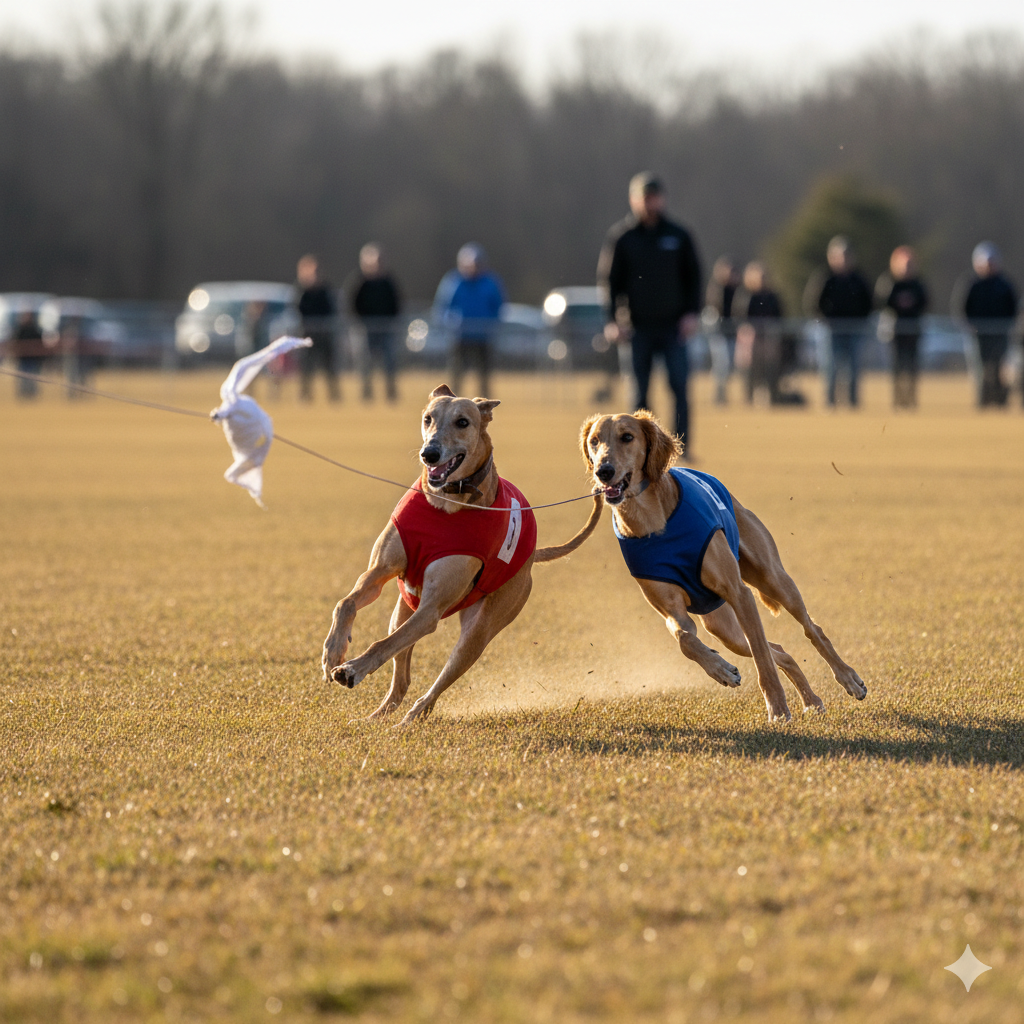
Have you ever watched a sighthound explode into a full-speed sprint, chasing after something only they can see, a blur of muscle and grace across an open field? If so, you’ve witnessed the raw, undeniable power of the chase instinct. This primal drive is not just for show; it’s the very foundation of the exhilarating dog sport known as Lure Coursing.
Lure Coursing is a competitive event where dogs, primarily sighthounds, chase an artificially propelled lure across an open field. It’s a sport that taps directly into their ancient hunting heritage, providing an incredibly fulfilling and physically demanding outlet for their natural prey drive. Forget boring laps around a track; Lure Coursing is about twists, turns, and flat-out speed, mimicking the unpredictable darting of live prey.
What Exactly is Lure Coursing? The Pursuit Perfected
At its heart, Lure Coursing is a simulation of open field hunting, but with a crucial difference: no animals are ever harmed. Instead, dogs chase a “lure”—typically a white plastic bag or strip of fabric—attached to a continuous loop line system. This line is pulled by a series of pulleys and a motor, allowing the “lure operator” to make the lure dart, stop, and change direction, mimicking the erratic movement of a rabbit or hare.
The Course Setup
- The Field: Lure Coursing takes place in a large, open, and securely fenced field, free of obstacles or hazards. Size can vary, but championship courses are often 600-1000 yards long.
- The Lure Line System: This is the magic behind the chase. A continuous loop of line runs around a series of pulleys strategically placed across the field. The lure operator controls the speed and movement of the line, bringing the lure to life.
- The Lure: Usually made of plastic strips or white fabric, chosen for its visibility and ability to be easily snagged by the dog without causing injury.
The Run
Dogs typically run in pairs or trios, all released simultaneously. This adds to the realism of the hunt, as sighthounds traditionally hunted in packs. The dogs are judged not only on speed but also on:
- Enthusiasm: How strongly they pursue the lure.
- Follow: Their ability to stay locked onto the lure.
- Agility and Endurance: Their ability to navigate the turns and maintain speed over the entire course.
- Speed: Their sheer velocity.
Each dog wears a colored blanket (red, white, blue, or black) to help judges identify them, especially when running in groups.
A Blast from the Past: The Roots of the Chase
Lure Coursing emerged in the 1970s as a humane alternative to live coursing, a traditional sport where sighthounds hunted live prey (like rabbits or jackrabbits). While live coursing was deeply ingrained in the history of sighthounds, ethical concerns about animal welfare led to a search for a more humane substitute.
The genius of the artificial lure system allowed sighthound owners to channel their dogs’ powerful instincts without harming any animals. The sport quickly gained traction, particularly in the United States, where organizations like the American Sighthound Field Association (ASFA) and later the American Kennel Club (AKC) developed standardized rules and titling systems.
Today, Lure Coursing is a vibrant and growing international sport, celebrated for its preservation of sighthound heritage and its commitment to ethical competition.
Who Can Chase? The Sighthound Advantage
While many dogs enjoy chasing, Lure Coursing is primarily designed for and dominated by sighthound breeds. These dogs were selectively bred over thousands of years for their incredible speed, acute vision, and powerful prey drive—traits perfectly suited for chasing down fast-moving prey over open ground.
Recognized Sighthound Breeds Include:
- Afghan Hound
- Basenji
- Borzoi
- Cirneco dell’Etna
- Greyhound
- Ibizan Hound
- Irish Wolfhound
- Italian Greyhound
- Pharaoh Hound
- Portuguese Podengo Pequeno
- Rhodesian Ridgeback (often considered a “sight & scent” hound)
- Saluki
- Scottish Deerhound
- Sloughi
- Whippet
All-Breed or CAT (Coursing Ability Test)
Recognizing the widespread appeal of the sport, many organizations now offer “all-breed” Lure Coursing events or Coursing Ability Tests (CATs). These events allow any breed (or even mixed breed) to participate, provided they are healthy and demonstrate a desire to chase the lure. While non-sighthound breeds may not achieve the same blinding speed or grace as a Greyhound, they can still enjoy the thrill of the chase and earn titles for participation. CATs typically involve shorter, simpler courses and focus more on enthusiasm and completion rather than pure speed.
The Thrill of the Sprint: What Happens at a Trial?
A Lure Coursing trial is an exciting spectacle, combining the beauty of athletic dogs with the tension of competition.
- Warm-up & Inspection: Dogs are typically warmed up by their handlers. Before running, each dog undergoes a physical inspection by a judge to ensure they are sound and fit to run.
- The Release: Dogs are held by a “slipper” (a volunteer who releases the dogs) at the starting line. When the lure operator signals the lure is moving, the slipper releases the dogs simultaneously.
- The Chase: The dogs sprint across the field, eyes fixed on the lure, navigating turns and changes in direction controlled by the lure operator.
- The Catch: The lure is designed to be caught at the end of the course, providing a satisfying conclusion for the dogs.
- Judging: Judges evaluate the dogs based on the criteria mentioned earlier (enthusiasm, follow, agility, endurance, speed). In breed-specific events, dogs earn points towards titles like Field Champion (FC) or Lure Courser of Merit (LCM). In CAT events, they earn titles like Coursing Ability (CA) or Coursing Ability Excellent (CAX).
Beyond the Ribbon: The Profound Benefits of Lure Coursing
While the competitive aspect is exciting, the true rewards of Lure Coursing run much deeper.
- Instinctual Fulfillment: For sighthounds, Lure Coursing is pure bliss. It allows them to express a deeply ingrained instinct in a safe and controlled environment. This instinctual fulfillment can lead to a happier, more content dog at home.
- Exceptional Exercise: Lure Coursing provides an unparalleled physical workout. It builds muscle, improves cardiovascular health, and burns immense amounts of energy. For high-energy sighthounds, it’s an ideal way to channel their power.
- Mental Stimulation: While it looks like pure physical exertion, Lure Coursing requires intense focus, tracking skills, and split-second decision-making to follow the lure’s erratic path.
- Confidence Building: Successfully completing a course and “catching” the lure can significantly boost a dog’s confidence, especially for those who might be a bit shy or unsure in other environments.
- Strengthening the Bond: The shared experience of the chase, the handler’s encouragement, and the dog’s sheer joy solidify the human-canine bond.
- Safety: Compared to live coursing or allowing sighthounds to free-run in unsecured areas (where they might chase real prey into danger), Lure Coursing offers a safe and controlled environment for them to fully express their drive.
- Community: The Lure Coursing community is passionate and welcoming, a great place to meet like-minded dog enthusiasts who share a deep appreciation for these magnificent athletes.
Getting Started: Unleash Your Dog’s Inner Hunter
Intrigued by the lure of the chase? Here’s how to introduce your dog to Lure Coursing:
- Check Breed Eligibility: If you have a sighthound, you’re good to go for breed-specific events. If not, look for CAT events.
- Health Check: Ensure your dog is in excellent physical condition with no orthopedic issues. This is a high-impact sport.
- Basic Obedience: A reliable “stay” and “recall” are essential, especially for CAT events where the dog might not have the same intense focus as a sighthound.
- Find a Local Club or Event: Search online for ASFA or AKC Lure Coursing events, or local sighthound clubs. Many clubs offer “fun runs” or “practice days” that are perfect for beginners.
- Introduce the Lure Positively: Let your dog see the lure, get excited about it. For some dogs, the lure is an instant trigger; others might need a gentle introduction.
- Start Short: Don’t expect a full-length course on the first try. Many venues have shorter practice tracks to build a dog’s confidence and stamina gradually.
- Prioritize Safety: Always run in a securely fenced area. Ensure the field is free of holes or debris.
Conclusion: The Pure Joy of the Pursuit
Lure Coursing is more than just a dog sport; it’s a testament to the incredible design of sighthounds and the enduring power of their instincts. It’s the thrill of watching a canine athlete pour every ounce of its being into the chase, moving with a grace and speed that truly takes your breath away.
For handlers, it’s the immense satisfaction of providing their dog with an activity that fulfills them on the deepest, most primal level. It’s the cheers of the crowd, the thundering of paws, and the pure, unadulterated joy in your dog’s eyes as they complete a magnificent run.
So, if your dog has a need for speed and a heart for the chase, it might be time to unleash their inner hunter and discover the exhilarating world of Lure Coursing. Get ready for some serious zoomies!

