


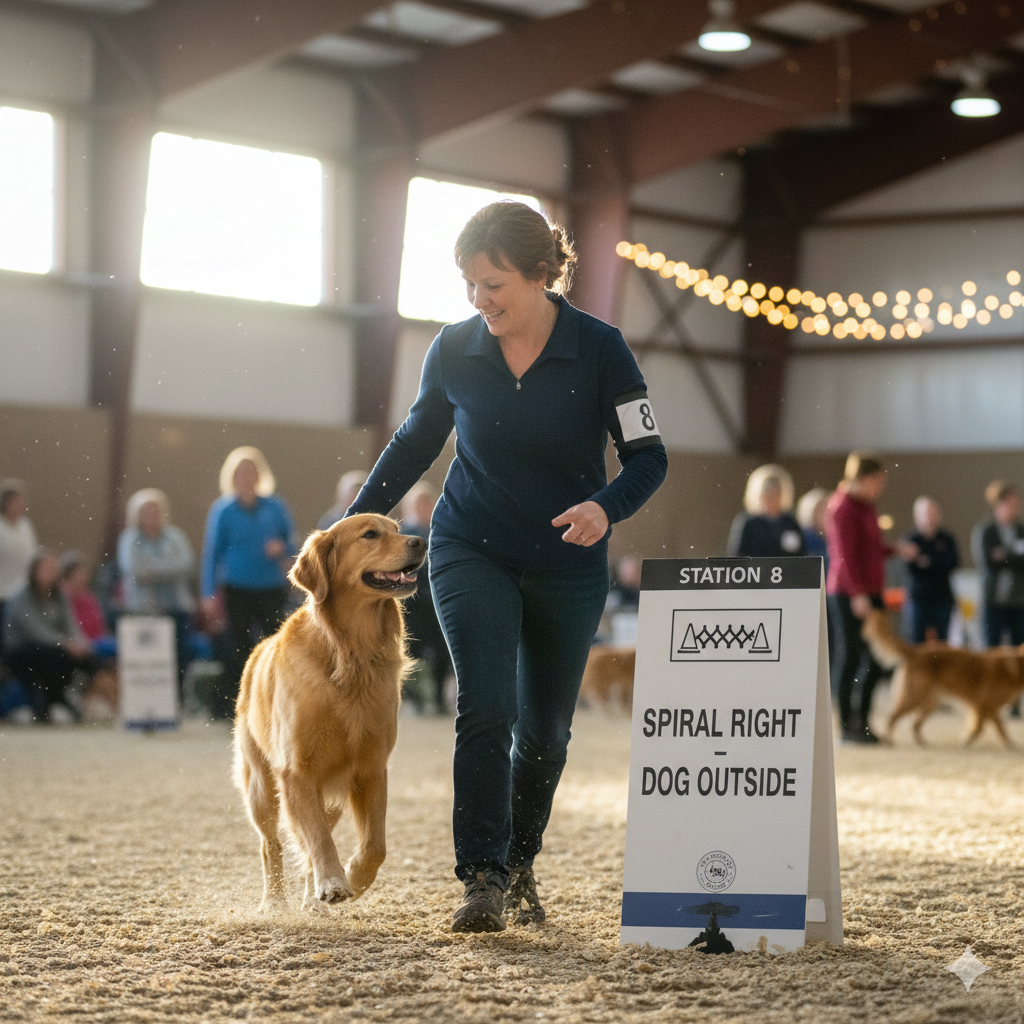
For many dog owners, the thought of competitive obedience conjures images of robotic dogs, stern judges, and a palpable sense of pressure. Traditional obedience, while incredibly rewarding, demands a level of precision that can feel daunting to newcomers. Enter Rally Obedience, the dog sport that’s transforming how people view competitive training, making it accessible, engaging, and, above all, fun!
Rally Obedience, often simply called “Rally,” is a unique blend of traditional obedience and agility, wrapped up in a welcoming, encouraging atmosphere. Instead of following a judge’s commands in a sterile ring, handler and dog navigate a course of numbered signs, each indicating a different obedience exercise to perform. It’s less about military-style precision and more about teamwork, flow, and the joy of working together.
What Exactly is Rally Obedience? The Course is Your Guide
Imagine a walk in the park with a purpose. In Rally, handler and dog move through a course laid out with 10 to 20 (or more, depending on the level) stations. At each station, there’s a sign detailing an obedience exercise to execute. The handler can talk, encourage, praise, and even use multiple verbal cues and hand signals throughout the course.
The Course Setup
- The Signs: These are the heart of Rally. Each sign displays a specific command or sequence of commands, often accompanied by diagrams, such as “Sit-Stay-Recall,” “Spiral Right – Dog Outside,” “Send Over Jump,” or “Figure 8 Forward.”
- The Flow: Unlike traditional obedience, where each exercise is performed independently, Rally emphasizes continuous motion. The handler and dog complete one exercise, then move briskly to the next, maintaining a connection throughout.
- The Judge: The judge oversees the course, ensuring exercises are performed correctly, but their role is less about giving commands and more about observation and scoring.
Scoring: Points, Penalties, and the “Q”
Teams start with a perfect score (usually 100 points). Points are deducted for errors, such as:
- Tight leash or tugging
- Dog not staying in position
- Lack of teamwork or enthusiasm
- Incorrect performance of an exercise
- Knocking over a cone (if applicable)
However, unlike traditional obedience, handlers are generally allowed to reward their dogs verbally throughout the course, and even use praise to keep the dog engaged. A “qualifying score” (typically 70-80 points, depending on the organization) earns you a leg toward a title.
The Evolution of Engagement: A Brief History of Rally
Rally Obedience is a relatively young sport, emerging in the early 2000s as a response to the desire for a more relaxed and dynamic form of competitive obedience. Charles L. “Bud” Kramer, a former American Kennel Club (AKC) obedience judge, is widely credited with developing the concept. His vision was to create a sport that was:
- More Accessible: Easier for new teams to get started without years of high-precision training.
- More Engaging: Promoted a happier, more interactive working relationship between handler and dog.
- More Dynamic: Offered continuous movement and variety.
The sport quickly gained traction due to its fun and encouraging atmosphere. The AKC officially recognized Rally Obedience in 2005, and since then, it has exploded in popularity, with various organizations (such as the United Kennel Club – UKC, and World Cynosport Rally – WCR) adopting their own versions, each with slightly different rules and nuances. This diverse landscape has made Rally a welcoming gateway for countless dog owners into the world of canine sports.
The Levels of Rally: From Novice to Masterpiece
Rally Obedience is structured into progressive levels, allowing teams to build skills and confidence as they advance.
1. Novice (RN)
- Course: 10-15 signs.
- Environment: Dog works on leash.
- Skills: Focuses on basic obedience commands like Sit, Down, Stay, basic heeling patterns, and simple changes of pace. Encourages handler interaction and flow. This is where teams learn the rhythm of Rally.
2. Intermediate (RI)
- Course: 10-15 signs.
- Environment: Dog works off leash.
- Skills: Builds on Novice with the added challenge of off-leash work. Still focuses on core obedience but requires greater trust and focus from the dog.
3. Advanced (RA)
- Course: 12-17 signs.
- Environment: Dog works off leash.
- Skills: Introduces more complex maneuvers like sending the dog over a jump, backing up, and intricate spirals and figure-eights around cones. Requires more advanced heeling and precise body positioning from the handler.
4. Excellent (RE)
- Course: 15-20 signs.
- Environment: Dog works off leash.
- Skills: Combines advanced skills with a greater emphasis on smooth transitions and a more polished performance. Often includes backing up several steps in heel position, side-stepping, and more challenging jumps.
5. Master (RM) / Championship (RACH, RCH)
- Course: 18-20 signs.
- Environment: Dog works off leash.
- Skills: The pinnacle of Rally. These courses incorporate the most difficult and intricate exercises from all previous levels, often requiring perfect execution, advanced handler movement, and a high degree of teamwork. Teams completing Master titles can then work towards championship titles, which involve accumulating qualifying scores at various levels.
Why Rally: The Benefits of a Happier Partnership
The explosion in Rally’s popularity isn’t just because it’s “easier” than traditional obedience. It offers profound benefits for both ends of the leash:
- Enhanced Communication: Rally encourages constant communication. Handlers are actively coaching their dogs, leading to a deeper understanding and responsiveness. Dogs learn to look to their handlers for guidance.
- Mental Stimulation: Navigating a changing course of exercises keeps a dog’s mind engaged. It prevents boredom and helps channel energy into constructive activity.
- Physical Fitness (Light): While not as physically demanding as Agility, Rally involves continuous movement, walking, trotting, and sometimes small jumps, providing good exercise.
- Boosted Confidence: The positive, encouraging atmosphere helps shy dogs come out of their shell, and handlers gain confidence in their training abilities. Every successful sign is a win!
- Inclusivity: Rally is suitable for almost any dog, regardless of breed, size, or age (with appropriate modifications for puppies and seniors). It’s also less physically demanding for handlers than some other dog sports.
- Fun and Motivation: The ability to talk to and praise your dog throughout the course keeps the atmosphere light and positive, making training and competing genuinely enjoyable. It’s a great way to bond without the intense pressure of other sports.
- A Stepping Stone: For those interested in traditional obedience or other dog sports, Rally provides an excellent foundation in precision heeling, focus, and teamwork in a less intimidating environment.
Getting Started: Your Path to Rally Success
Ready to embark on your Rally adventure? Here’s how to begin:
- Basic Obedience: A solid foundation of Sit, Down, Stay, and basic loose-leash heeling is essential. These are the building blocks.
- Find a Local Class: Look for dog training clubs or private instructors who offer Rally Obedience classes. They will guide you through the rules, signs, and proper execution.
- Get Your Gear: You’ll need a well-fitting, comfortable collar or harness (check local club rules for what’s allowed in the ring) and a 6-foot leash.
- Practice Positively: Use high-value treats and enthusiastic praise. Keep training sessions short, fun, and successful.
- Start with Novice: Don’t skip ahead. Master the Novice level first; it builds the crucial bond and understanding needed for higher levels.
- Attend a Trial: Even if you’re not competing yet, watching a Rally trial will give you a great sense of the flow, the atmosphere, and the different exercises. Observe experienced teams and pick up tips.
- Embrace the Journey: Rally is about continuous improvement and having fun with your dog. Celebrate small victories and enjoy the partnership.
Conclusion: A Partnership in Motion
Rally Obedience is a beautiful testament to what’s possible when training is approached with positivity, clear communication, and a spirit of joyful collaboration. It takes the precision of obedience and infuses it with dynamic movement and constant interaction, creating a sport that truly celebrates the unique bond between handler and dog.
It’s the perfect sport for those who want to challenge themselves and their dogs, earn titles, and experience the thrill of competition without losing the sheer fun and spontaneity that makes having a dog so special. So, grab your leash, lace up your shoes, and get ready to discover the engaging world of Rally Obedience – where every sign is an opportunity for teamwork and triumph!

