


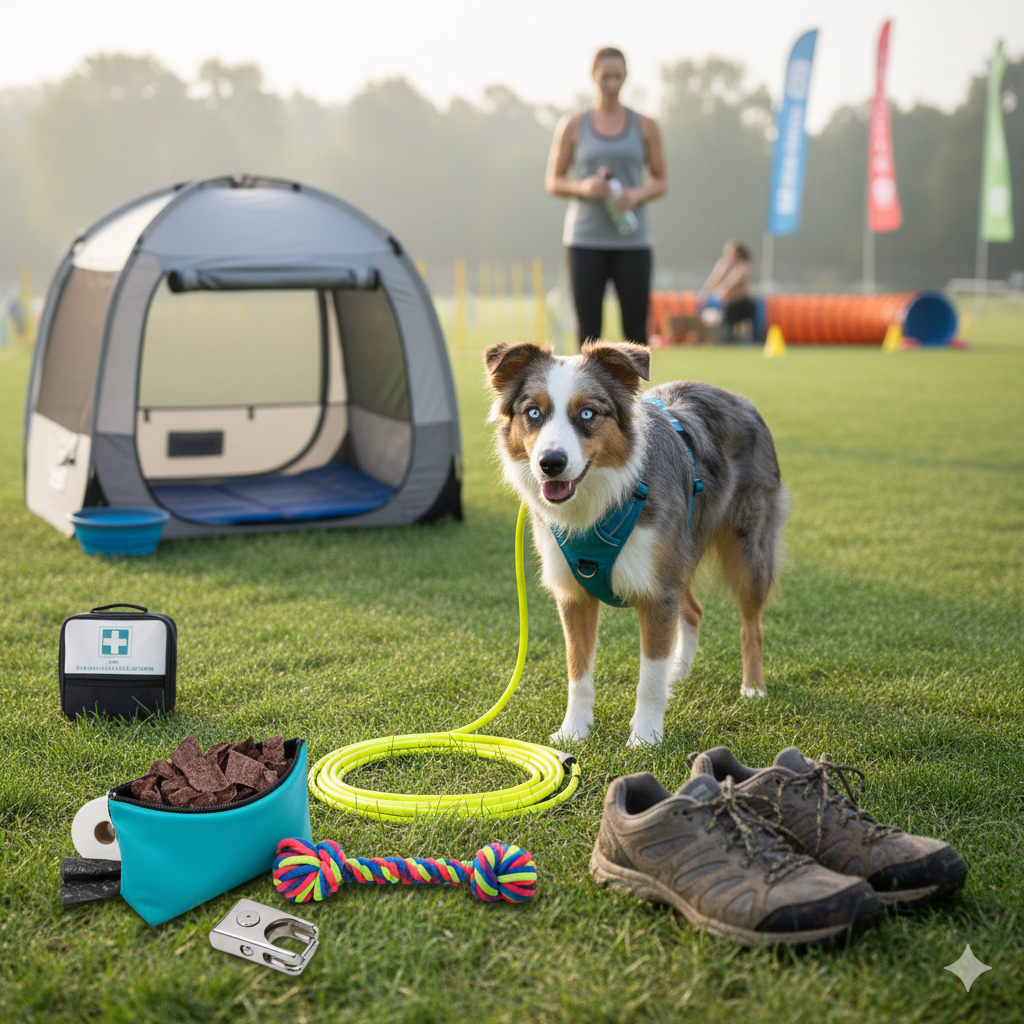
You’ve dipped your toe into the exciting waters of dog agility. Maybe you’ve watched a trial, read a few articles, and even started some foundation work with your dog. Now, the next logical step is to gather your gear. But what exactly do you need?
It’s easy to get overwhelmed by the sheer volume of products marketed to dog sports enthusiasts. While your dog might be the star athlete, you, the handler, are the coach, the motivator, and the crucial connection between your dog and the course. Having the right tools for yourself and your dog can make a world of difference in training effectiveness, comfort, and trial day success.
This guide will break down the essential gear every new agility handler should consider, from what goes on your dog to what goes on you, and a few items for convenience.
Gear for Your Canine Athlete: Comfort and Control
The equipment your dog wears is paramount for their safety and performance.
1. The Right Collar for the Right Moment
- Flat Collar or Martingale: Your dog will wear a flat collar (or a martingale, especially good for breeds with narrow heads to prevent slipping) for walking to and from the ring. It should be snug enough not to slip off but loose enough for comfort. Attach your dog’s identification tags here.
- A Word on Choke/Prong/E-Collars: While some trainers use these for specific training scenarios, they are generally not allowed on the dog during competition or in the immediate ring area. For agility, the focus is on positive reinforcement and building drive.
2. The Agility Harness (Optional, but Recommended for Training)
- Why a Harness? While dogs compete without a harness, a well-fitting, comfortable harness (like a Y-front or H-back style) is excellent for foundation work, especially for teaching directional cues or for doing fitness exercises. It distributes pressure evenly and prevents neck strain.
- Key Features: Look for a harness that allows full range of shoulder motion and doesn’t restrict breathing. Avoid “no-pull” harnesses that tighten under the armpits, as these can be uncomfortable during active movement.
3. High-Value Reward Toys
- The Ultimate Motivator: In agility, food is great, but a toy often reigns supreme for drive-building and immediate reinforcement. A good reward toy should be:
- Irresistible: Your dog should go absolutely wild for it.
- Durable: It needs to withstand enthusiastic tugging and play.
- Safe: No small parts that can break off.
- Easy to Carry: Small enough to fit in your treat pouch or pocket without being bulky.
- Popular Choices: Fuzzy tug toys, bungee tugs, squeaky balls on ropes, or rubber retrieve toys. Have a few different options to see what your dog loves most.
4. High-Value Treats
- Small, Soft, Stinky: For rapid-fire rewards, especially in foundation work, you need treats that are:
- Small: So your dog can swallow them quickly without breaking stride.
- Soft: Easy to chew, no crumbs.
- Stinky: The smellier, the better! Cooked hot dogs, cheese sticks, or boiled chicken are often favorites.
- Variety is Key: Rotate your treats to keep your dog guessing and engaged.
5. Long Line (for Distance Training)
- Safety and Freedom: A 15- to 30-foot long line (made of Biothane, nylon, or cotton) is invaluable for teaching recall, distance work, and preventing your dog from self-reinforcing bad habits during foundation training. It provides a safety net while allowing your dog more freedom than a standard leash.
Gear for the Handler: Comfort and Communication
You’re a vital part of the team. Your comfort and ability to move freely directly impact your dog’s performance.
1. Athletic Footwear
- Traction is King: You will be running, stopping, starting, and turning on various surfaces (grass, dirt, artificial turf, sometimes even damp or muddy ground). Invest in good quality trail running shoes or agility-specific footwear with excellent grip and support.
- Avoid: Flat-soled sneakers or shoes with poor ankle support.
2. Comfortable, Athletic Clothing
- Freedom of Movement: Wear clothing that allows a full range of motion. Baggy clothes can snag, and tight clothes can restrict. Moisture-wicking fabrics are a plus, as you will sweat!
- Layers: Be prepared for varying weather conditions at outdoor trials.
3. Treat Pouch / Bait Bag
- Quick Access: An absolute necessity. A sturdy treat pouch clips onto your belt or waistband and allows you to quickly access treats without fumbling. Look for one with a wide opening and a secure closure.
4. Clicker (Optional, but Highly Recommended)
- Precision Marking: If you use a clicker in your training, it’s a powerful tool for marking the exact moment your dog performs the desired behavior.
- Key Features: Simple, reliable click. Some handlers prefer box clickers; others prefer target stick clickers.
5. Whistle (for Distance Cues)
- Consistency: For those who want to use verbal directional cues at a distance, a whistle can provide a consistent tone that carries further than your voice, especially in noisy environments.
Gear for Convenience and Trial Day Success
These items aren’t strictly necessary for training, but they make life much easier at classes and trials.
1. Crate or Soft-Sided Kennel
- Safe Space: Your dog will spend time crated at trials. It’s their safe, familiar den where they can rest, relax, and stay out of trouble between runs. Ensure it’s well-ventilated and comfortable.
2. Water Bowl and Water Bottle
- Hydration: Essential for both you and your dog, especially during active training or on warm trial days. A portable, collapsible water bowl is perfect.
3. Portable Shade (Umbrella, Pop-Up Tent)
- Sun Protection: If training or trialing outdoors, a good umbrella or a small pop-up canopy can provide much-needed shade for your dog (and you) on sunny days.
4. Cooling Mat or Cooling Vest (for warm weather)
- Overheating Prevention: Dogs can overheat easily. A cooling mat for their crate or a cooling vest can help regulate their body temperature.
5. Foldable Chair
- Your Comfort: You’ll be doing a lot of waiting. A comfortable, lightweight folding chair is a small luxury that makes a big difference.
6. Poop Bags
- Responsible Dog Ownership: Always have plenty on hand. A clean training environment is everyone’s responsibility.
7. First-Aid Kit (Human and Canine)
- Preparedness: A small kit with essentials like bandages, antiseptic wipes, vet wrap, and saline solution can handle minor scrapes or paw pad issues.
Conclusion: Equipping for Success
Getting started in agility doesn’t require emptying your bank account. Many foundational skills can be taught with just a few treats, a tug toy, and your enthusiasm. However, as you progress, investing in the right gear for both you and your dog will enhance your training, improve your comfort, and ultimately contribute to a more successful and enjoyable agility journey.
Remember, the best gear in the world can’t replace good training and a strong bond with your dog. But when combined with those, it can certainly help you fly!

