


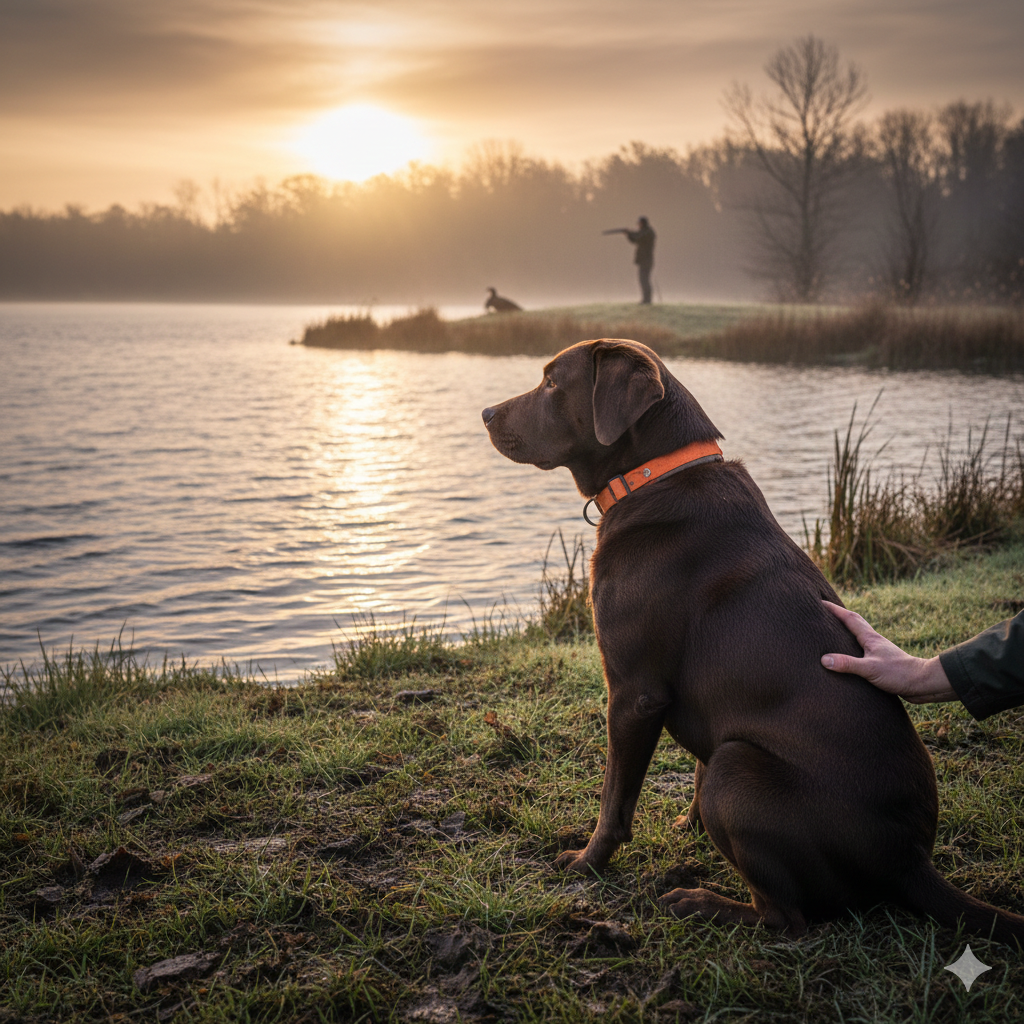
For centuries, the relationship between a hunter and their retriever has been one of the most storied partnerships in the animal kingdom. But for a specific community of enthusiasts, the casual weekend hunt is just the beginning. Welcome to the world of Retriever Field Trials—the most prestigious, demanding, and technically complex dog sport in existence.
Often described as “the grand prix of dog sports,” a Field Trial isn’t just about fetching a bird. It is a grueling test of a dog’s memory, intelligence, athleticism, and—perhaps most importantly—their ability to take direction from a handler hundreds of yards away. It is where the elite of the Labrador, Golden, and Chesapeake Bay Retrievers compete to prove they are the ultimate canine athlete.
What is a Retriever Field Trial?
Unlike “Hunt Tests,” where dogs are judged against a written standard to earn titles (like Junior or Master Hunter), Field Trials are competitive. Dogs are pitted against one another, and only the top four placements in each stake earn points.
The goal is to simulate the most difficult scenarios a hunter might encounter in the wild, then amplify them to test the limits of the dog. These “setups” involve retrieving downed birds (typically ducks or pheasants) over land and water. The distances are staggering; while a typical hunt might involve a 40-yard retrieve, a Field Trial dog may be asked to navigate a 400-yard line through heavy cover, across multiple bodies of water, and past distracting scents.
The Three Pillars of the Trial: Marks, Blinds, and Steadiness
To succeed at a Field Trial, a dog must master three distinct skills. If any one of these pillars crumbles, the dog is “dropped” (eliminated) from the competition.
1. Marking (The “Memory” Game)
In a marking test, birds are thrown into the air (accompanied by a gunshot) while the dog watches from the “line.” A “Triple” or “Quad” involves three or four birds being downed in different locations.
- The dog must remember exactly where each bird fell without being told.
- They must navigate “suicide” lines—where one bird falls behind a bush and another falls in a pond—and retrieve them one by one.
- The “Pin”: Judges look for a dog that goes straight to the fall area. “Hunting” for the bird (searching around aimlessly) results in a lower score.
2. Blind Retrieves (The “GPS” Game)
This is where the true “magic” happens. In a blind retrieve, a bird is placed in a location the dog did not see. The handler knows where it is; the dog does not.
- The handler uses a whistle and hand signals to cast the dog toward the bird.
- One whistle blast means “Stop and look at me.” A hand signal then tells the dog “Go left,” “Go right,” or “Get back.”
- A dog that takes a “perfect line”—running a straight 300-yard path through wind and water as if on rails—is the gold standard.
3. Steadiness and Control
A dog must be “steady to wing and shot.” This means they must sit quietly while birds are flying and guns are firing, waiting for the handler’s command to “go.” A dog that breaks (leaves before being sent) is immediately disqualified.
The Anatomy of a Setup: Land and Water
Field Trials are typically divided into “Land Series” and “Water Series.”
- Land Series: These test a dog’s ability to “square” a hill or run through “heavy cover” (thick brush) without being diverted by easier paths.
- Water Series: These are the most difficult. Dogs must “re-enter” water multiple times (a “cheating” mark) and maintain a straight line despite cross-currents or wind that wants to push them off course.
The Stakes: From “Derby” to “National”
Field Trials are organized into “Stakes” based on the age and experience of the dog:
| Stake | Eligibility | Complexity |
| Derby | Dogs under 2 years old | Mainly double marks; tests natural marking ability. |
| Qualifying | Intermediate dogs | Introduces more complex blinds and triples. |
| Amateur All-Age | Handled by non-professionals | Extremely difficult; full triples/quads and long blinds. |
| Open All-Age | Open to anyone (usually pro-handled) | The highest level; the winner often becomes a “Field Champion” (FC). |
The ultimate goal for any serious competitor is the National Championship, where the top-qualified dogs in the country compete over several days for the title of National Field Champion (NFC).
Why Field Trials are the “Ultimate” Challenge
What separates Field Trials from every other dog sport is the Distance and Duration.
In most dog sports, you are within 20 feet of your dog. In a Field Trial, your dog is often a quarter-mile away. You are communicating via a small whistle and a wave of the hand. The level of trust required is immense. The dog must be “biddable” (willing to take direction) but also “courageous” enough to keep swimming through icy water or pushing through briers when they can’t see the prize.
Furthermore, the Scent Environment is constantly changing. A dog must learn to ignore “old scent” (where a bird was previously) and focus on the “fresh fall.” This requires a level of scent discrimination that is as sophisticated as that of a drug-sniffing dog, but performed at a dead sprint.
The Elite Breeds: Who Competes?
While the sport is technically open to all “Retriever” breeds, it is heavily dominated by:
- Labrador Retrievers: The undisputed kings of the sport due to their intense drive and high biddability.
- Golden Retrievers: Known for their excellent marking and “soft” mouths, though they often require more patient training.
- Chesapeake Bay Retrievers: Famous for their toughness in icy water and “never-quit” attitude.
You will rarely see a “show line” dog at a Field Trial. These are “Field Line” dogs—leaner, faster, and bred for generations for their “birdiness” and athletic prowess.
The Training: A Lifetime Commitment
Training a dog for the Open All-Age level takes years of daily work. Most serious competitors train 5 to 6 days a week.
- Puppyhood: Focuses on “socialization” to birds and water.
- The “Basics”: Teaching the dog to “force to pile” (go when told regardless of distractions) and the “T-Pattern” (the foundation of hand signals).
- Transition: Moving from simple backyard drills to complex field setups.
- The “All-Age” Level: Fine-tuning the dog’s ability to handle “retired guns” (people who hide after throwing a bird) and extremely long water entries.
Because of the time commitment, many owners send their dogs to Professional Trainers. These pros live on “circuits,” following the warm weather from the South in the winter to the North in the summer to ensure the dogs can train year-round.
The Ethics of the Sport: Conservation and Respect
Field Trials are deeply rooted in the hunting tradition. By breeding and training dogs to be more efficient retrievers, the sport promotes conservation—ensuring that no downed game is ever lost in the field.
Furthermore, the bond between the “Gallery” (the spectators) and the teams is one of deep respect. Everyone in the gallery knows exactly how much work went into that 400-yard blind retrieve. When a dog “pins” a difficult triple, the applause is genuine.
How to Get Involved
If you have a retriever and want to see if they have what it takes:
- Find a Local Club: Search for AKC-affiliated Retriever clubs in your area.
- Start with a Hunt Test: Hunt tests (Junior Hunter) are a great “bridge” into the world of field work. They are less competitive and more about foundational skills.
- Attend a Trial: Go as a spectator. Bring a chair, some binoculars, and watch the Open stake. It is a masterclass in canine communication.
- Read the “Bible”: Pick up a copy of Training Retrievers for Marshes and Meadows by James Spencer or look into the “Lardy” or “Graham” training systems.
Conclusion: The Grandest Game
Retriever Field Trials are not for the faint of heart. They are expensive, time-consuming, and often heartbreaking when a dog you’ve trained for years makes a single mistake and is “knocked out” in the first series.
But for those who love the sight of a dog in its element—muscles rippling, water spraying, eyes locked on a distant horizon—there is no greater thrill. It is the ultimate expression of what a dog can achieve: a perfect blend of ancient instinct and modern discipline.

