


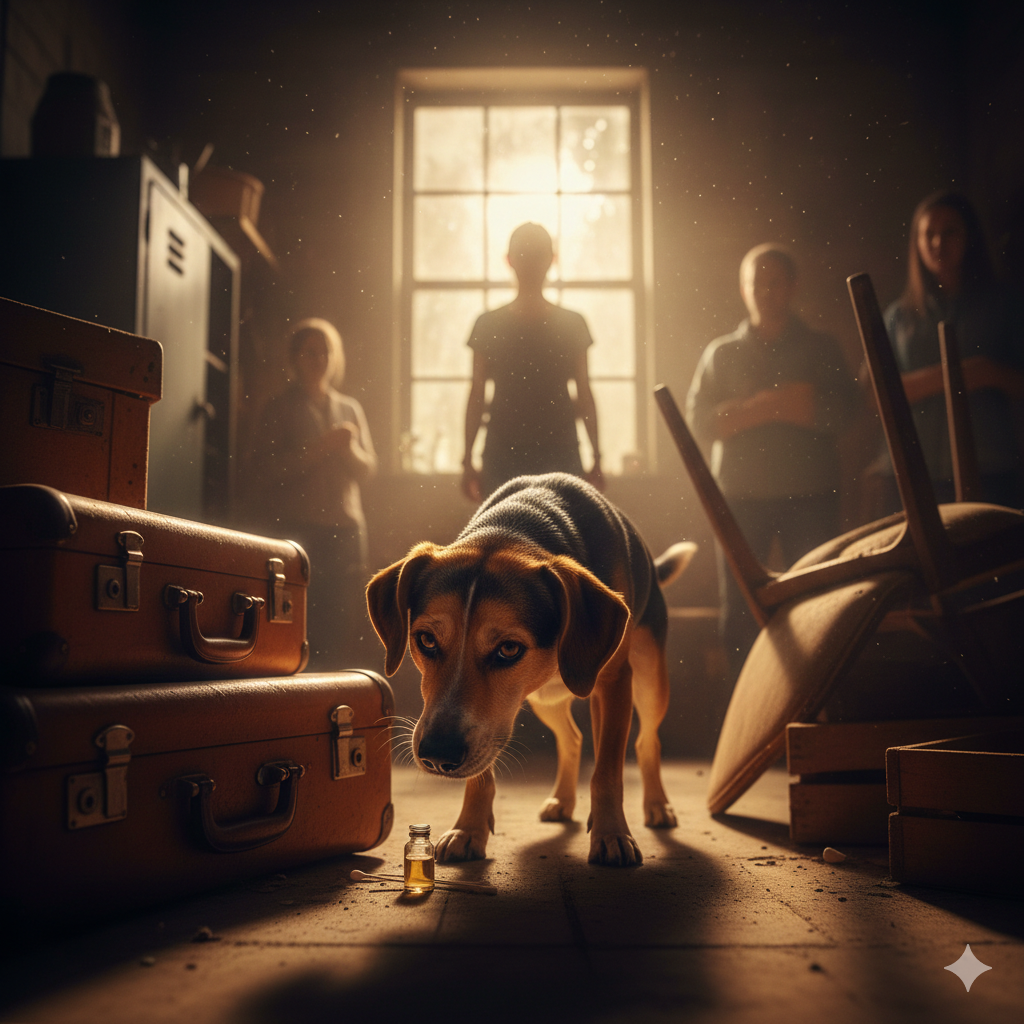
Every dog possesses an extraordinary sense of smell. While humans rely primarily on sight, a dog’s world is a rich tapestry of odors, each sniff a story, a history, a revelation. For centuries, we’ve harnessed this incredible ability in working dogs—from search and rescue to bomb detection. But what about the average pet dog? What about giving them a chance to use their most powerful sense in a fun, engaging, and utterly captivating way?
Enter Scent Work (also known as Nose Work or K9 Nose Work), the rapidly growing dog sport that allows any dog, regardless of breed, age, or physical ability, to become a detection dog in training. It’s a sport that builds confidence, sharpens focus, and provides unparalleled mental stimulation, proving that sometimes, the greatest adventure lies not in how high you can jump or how fast you can run, but in the invisible pathways of scent.
What Exactly is Scent Work? The Art of the Search
Scent Work is designed to mimic the work of professional detection dogs. Dogs are trained to identify and locate specific target odors (initially essential oils like birch, anise, and clove) hidden in various environments. Once they find the source of the odor, they communicate their find to their handler, usually by freezing, sitting, or pointing with their nose.
The Target Odors
In competitive Scent Work, dogs are typically trained to find one or more essential oils. These oils are typically diluted and placed on cotton swabs or other inert materials, which are then hidden.
- Birch: The first and most common target odor, often used at the Novice level.
- Anise: Introduced at the Advanced level.
- Clove: Introduced at the Excellent level.
- Cypress: Sometimes used at the Master level.
The Search Areas
Competitive Scent Work trials involve searches in four distinct environments, designed to challenge the dog’s ability to locate odor in varied conditions:
- Container Searches: The dog searches a collection of identical containers (boxes, luggage, buckets, etc.) to find the one containing the target odor. This teaches the dog to systematically search and discriminate.
- Interior Searches: The dog searches an indoor room (e.g., a classroom, office, or hallway) for hidden odor. This can include odors hidden high, low, or within furniture.
- Exterior Searches: The dog searches an outdoor area (e.g., a grassy lawn, a patio, a parking lot) for hidden odor. Wind, weather, and environmental distractions make these particularly challenging.
- Vehicle Searches: The dog searches one or more vehicles (cars, trucks, trailers) for hidden odor, often located on tires, bumpers, or door seams.
A Scent-sational History: From Working Dogs to Pet Companions
The concept of Scent Work for pet dogs originated in the early 2000s when a group of professional K9 handlers (Ron Gaunt, Amy Herot, and Jill Marie O’Brien) recognized the incredible benefits of detection work for all dogs, not just those destined for law enforcement or military roles. They developed a methodology called “K9 Nose Work” specifically designed to be accessible to pet dogs, emphasizing positive reinforcement and natural instincts.
Their aim was to:
- Build Confidence: Especially for shy or reactive dogs who struggle in other dog sports.
- Provide Mental Enrichment: A powerful outlet for dogs’ natural sniffing behaviors.
- Create a Fun Activity: A way for owners to bond with their dogs through an engaging pursuit.
The sport quickly gained traction, and organizations like the National Association of Canine Scent Work (NACSW) were formed to host trials. Soon after, major kennel clubs like the American Kennel Club (AKC), United Kennel Club (UKC), and Canadian Kennel Club (CKC) introduced their own Scent Work titles and rules, solidifying its place as a popular and beneficial dog sport worldwide.
The Levels of Scent Work: From Novice Sniffers to Master Detectors
Scent Work is structured into progressive levels, each introducing more complex challenges in terms of odor combinations, hide placements, and search environments.
1. Novice
- Odor: Birch.
- Hides: Single, easily accessible hides.
- Search Areas: Introduces all four search elements (containers, interior, exterior, vehicles) with straightforward setups.
- Goal: Dog demonstrates a clear understanding of the target odor and a systematic search pattern.
2. Advanced
- Odor: Birch and Anise (sometimes a choice of one or both).
- Hides: More challenging placements (e.g., higher, lower, less obvious).
- Search Areas: Larger areas, more complex container setups (e.g., moving containers), more distractions in exterior.
- Goal: Dog consistently identifies target odors, handles more complex search scenarios, and demonstrates increased endurance.
3. Excellent
- Odor: Birch, Anise, and Clove (often all three, or combinations).
- Hides: Very challenging, sometimes “convergent odors” (multiple odors in close proximity) or “divergent odors” (multiple odors far apart).
- Search Areas: Larger, more cluttered, more realistic environments.
- Goal: Dog confidently works multiple odors, handles complex environmental factors, and maintains focus over longer searches.
4. Master
- Odor: All three primary odors, plus sometimes a fourth (Cypress).
- Hides: Extremely difficult, often multiple hides in a single search, sometimes “blind hides” where the judge doesn’t even know the exact location until after the search.
- Search Areas: Highly complex and realistic scenarios, often combining elements (e.g., interior/exterior combo).
- Goal: Dog demonstrates exceptional independence, problem-solving skills, and a high level of proficiency in finding multiple, complex hides.
Why Scent Work? The Unseen Rewards
The benefits of engaging in Scent Work are profound and wide-ranging for both dogs and their handlers.
- Ultimate Mental Enrichment: Sniffing is a dog’s natural superpower. Scent Work allows them to use their brains in the most natural and fulfilling way possible, which is incredibly tiring and satisfying for them. A “sniff-tired” dog is a happy, calm dog.
- Confidence Builder: For shy, fearful, or reactive dogs, Scent Work can be transformative. It’s an independent activity where the dog is empowered to make decisions and be successful, often leading to a significant boost in self-assurance. Because dogs can work one at a time, it’s also ideal for dogs who struggle in group settings.
- Accessible to All: This is truly a sport for every dog. Young puppies can start with simple container games, senior dogs can participate at their own pace, and dogs with physical limitations (three-legged, blind, deaf) can excel. There are no size, breed, or age restrictions.
- Strengthens the Bond: Handlers learn to trust their dog’s nose and “read” their dog’s subtle signals. This quiet communication and shared success create an incredibly deep and unique bond.
- Focus and Problem-Solving: Dogs learn to concentrate, ignore distractions, and systematically break down a search area to find the odor source.
- Safe and Fun: There’s no physical impact like jumping or hard running. It’s a low-stress, high-reward activity that brings immense joy.
- Real-World Skills: While for fun, the skills learned in Scent Work are directly transferable to practical applications, even if you never pursue professional detection.
Getting Started: Unleash the Sniffer!
Ready to tap into your dog’s most powerful sense? Here’s how you can embark on your Scent Work journey:
- Start with the Basics (The “Game”): Begin by associating a high-value treat or toy with a specific scent. Many people use a small amount of birch oil (purchased from a reputable canine sports supplier, never a craft store) on a cotton swab and hide it in a container.
- Make it Easy and Fun: Initially, make the hides very obvious. The goal is to build excitement and success. The dog learns that odor means reward.
- Find an Instructor/Club: Look for certified Scent Work instructors or local dog training clubs that offer Nose Work or Scent Work classes. They can guide you through proper handling techniques, scent theory, and how to safely introduce the target odors.
- Embrace the “Blind” Search: A crucial aspect of Scent Work is learning to trust your dog. The handler often doesn’t know where the hide is, so you must learn to read your dog’s signals and follow their lead.
- Practice in Various Environments: Once your dog understands the game, practice in different locations—inside your home, in your yard, in different rooms—to help them generalize the concept of “search.”
- Attend an Odor Recognition Test (ORT): Before competing in many organizations, your dog must pass an ORT, demonstrating they can identify the target odors without being confused by distractions.
- Keep it Positive: Always end training sessions on a high note. Scent Work is inherently rewarding for dogs, so keep the pressure low and the fun high.
Conclusion: The Invisible World, Revealed
Scent Work is a revelation. It opens up a whole new dimension of understanding between humans and dogs, allowing us to glimpse the rich, intricate world our dogs inhabit through their noses. It’s a sport that celebrates the unique talents of every dog, proving that heroism isn’t just about speed or strength, but about the quiet, unwavering dedication to a scent.
Whether you’re looking for a low-impact activity for an older dog, a confidence booster for a shy pup, or simply a deeply fulfilling way to bond with your companion, Scent Work offers an adventure like no other. So, let your dog lead the way, trust their incredible nose, and prepare to be amazed by the hidden world they will reveal to you.

